
Session 5 of 6
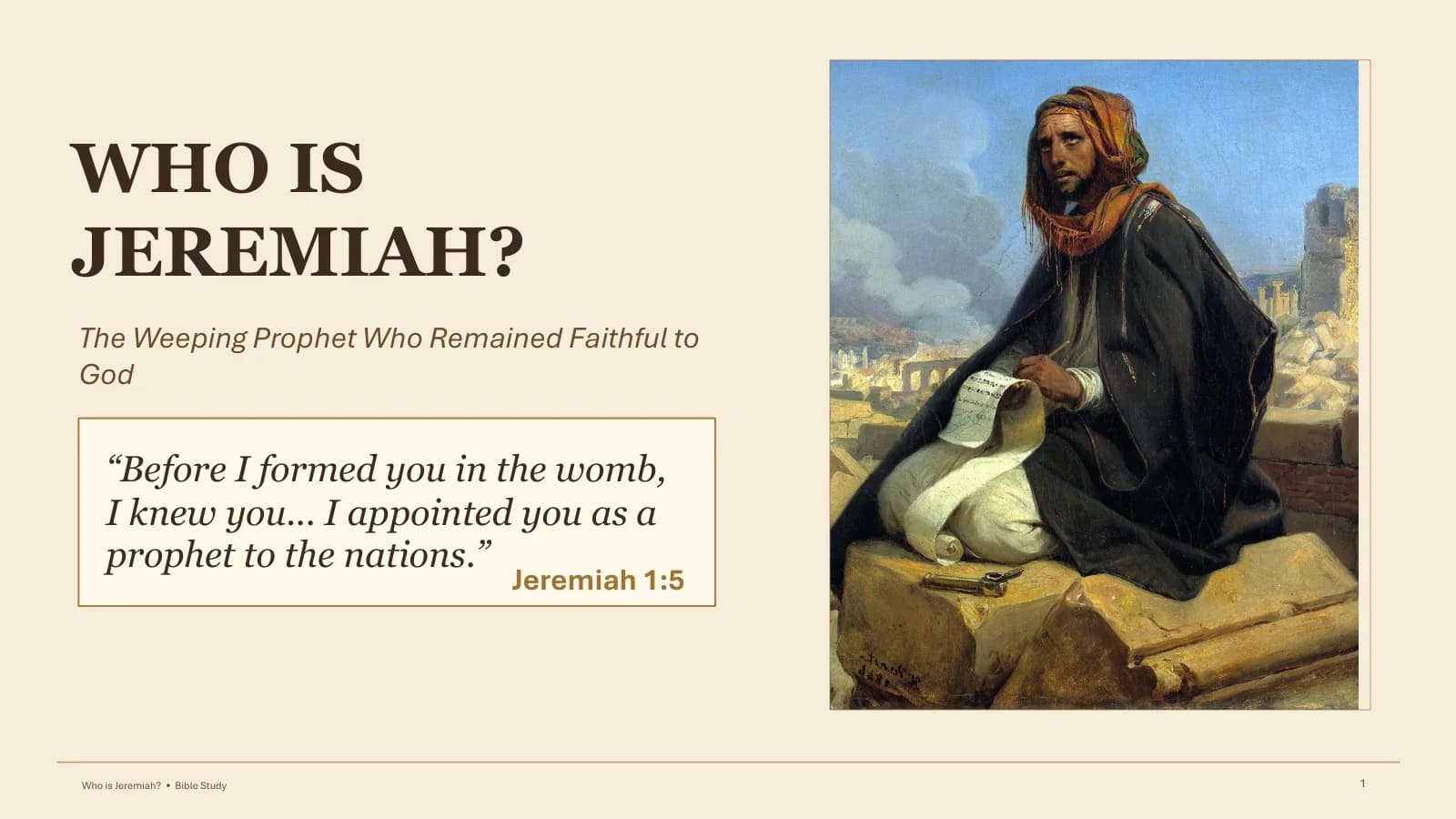
Who Is Jeremiah? The Weeping Prophet
A trauma-aware Bible study in the life of the weeping prophet
Focus
A trauma-aware Bible study — calling, opposition, lament, and the new covenant.
What this study is for
Not just information, but formation — learning to listen to God faithfully in painful seasons. The group rhythm is Scripture, context, story, reflection, prayer. By the end we want to know who Jeremiah was and why God called him, understand the crisis of Judah and Babylon, see why he is remembered as the weeping prophet, and connect his suffering with what this series has been saying about trauma and healing.
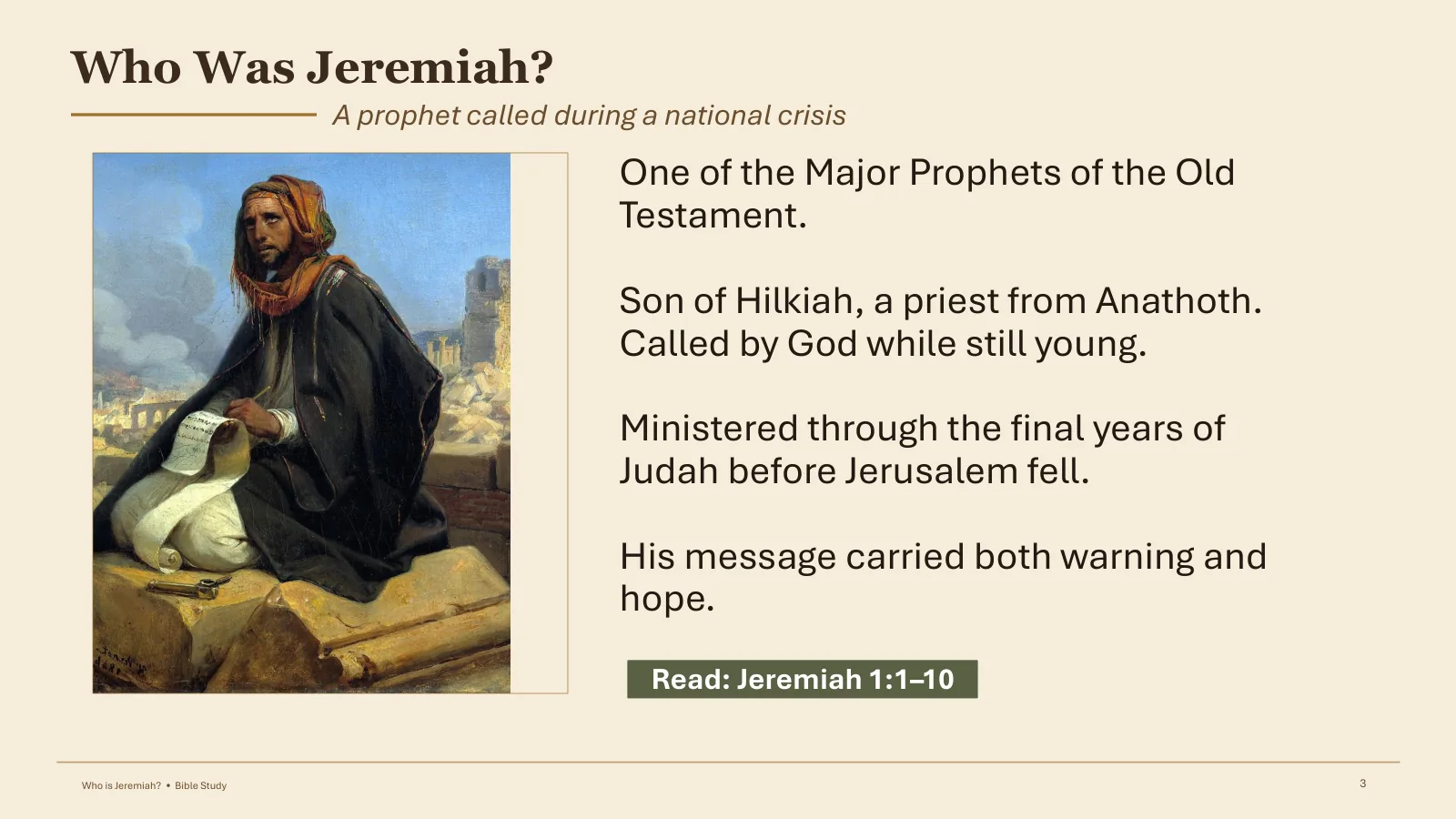
Who was Jeremiah?
One of the major prophets of the Old Testament, son of Hilkiah, a priest from Anathoth. He was called by God while still young and ministered through the final years of Judah before Jerusalem fell. His message carried both warning and hope, and he lived long enough to see the warning come true.
Before I formed you in the womb I knew you, before you were born, I set you apart.
Jeremiah 1:5His calling
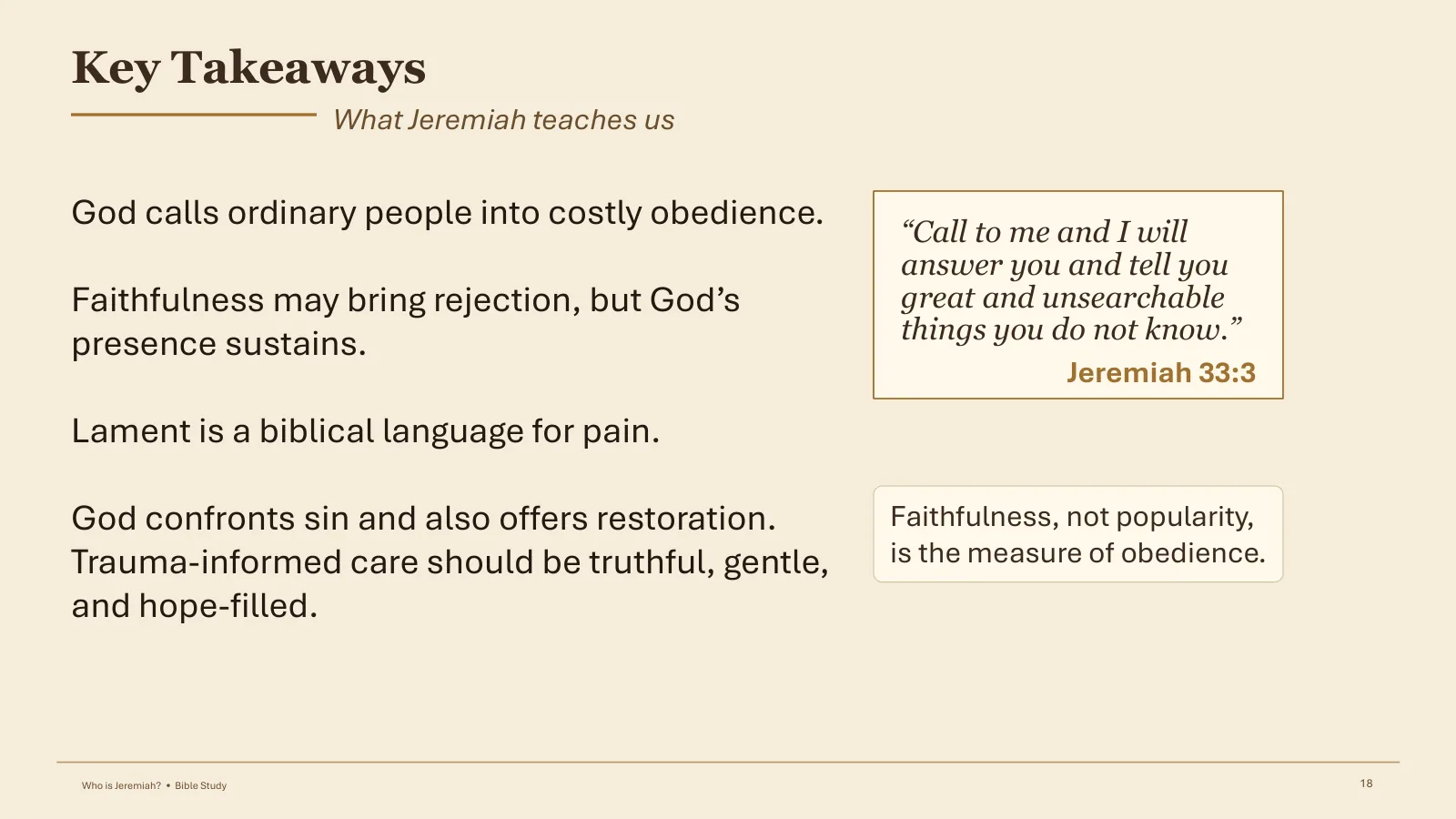
God’s calling was personal — “I knew you.” It was purposeful — “I set you apart.” It was missional — “I appointed you.” And it was sustained by His presence rather than by Jeremiah’s ability. God’s work in us often begins before we fully understand ourselves.
He felt inadequate, and said so
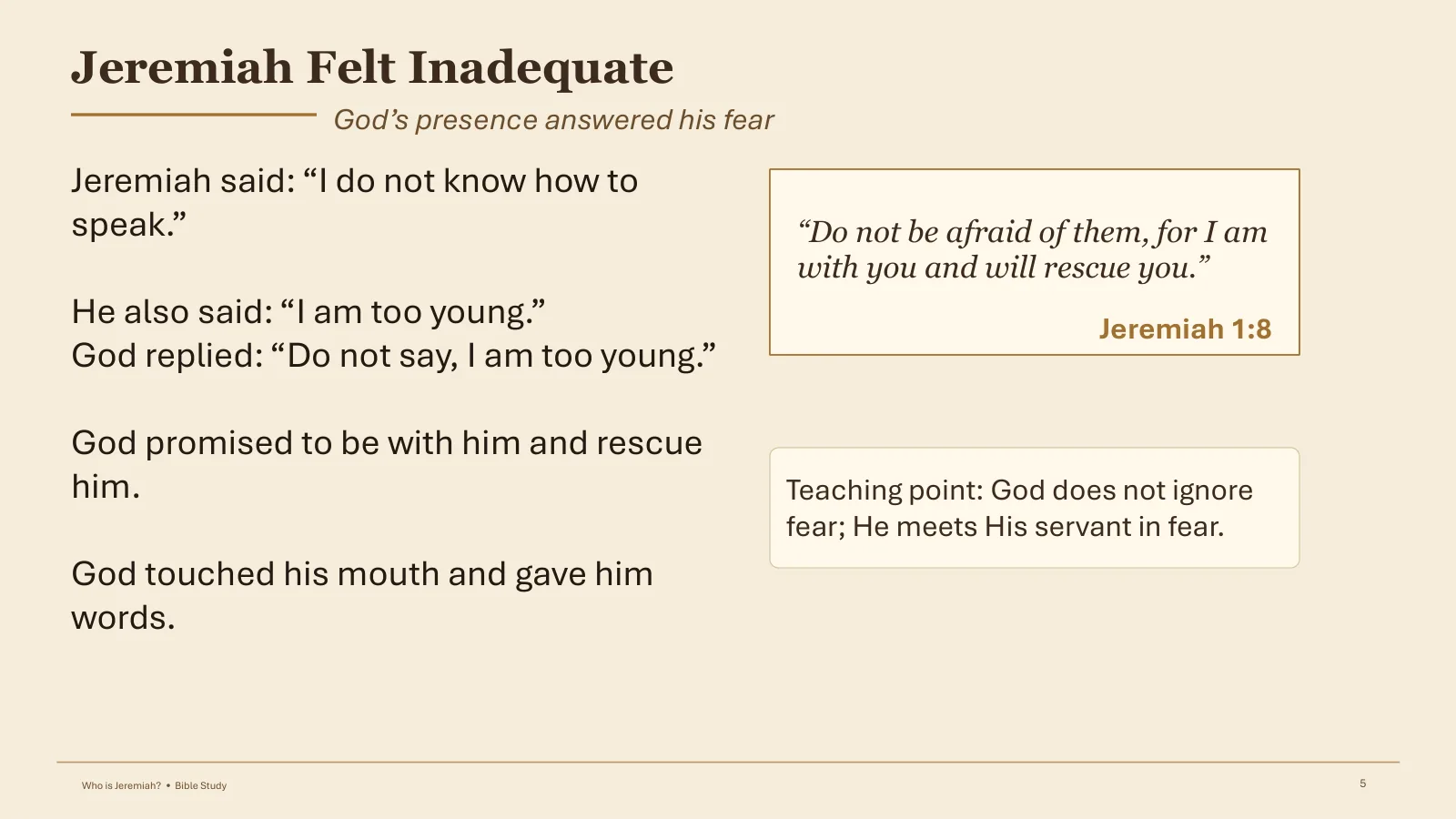
Jeremiah answered that he did not know how to speak, and that he was too young. God did not dismiss the fear; He met him in it — “Do not be afraid of them, for I am with you and will rescue you” — then touched his mouth and gave him words. God does not ignore fear. He meets His servant inside it.
The historical background
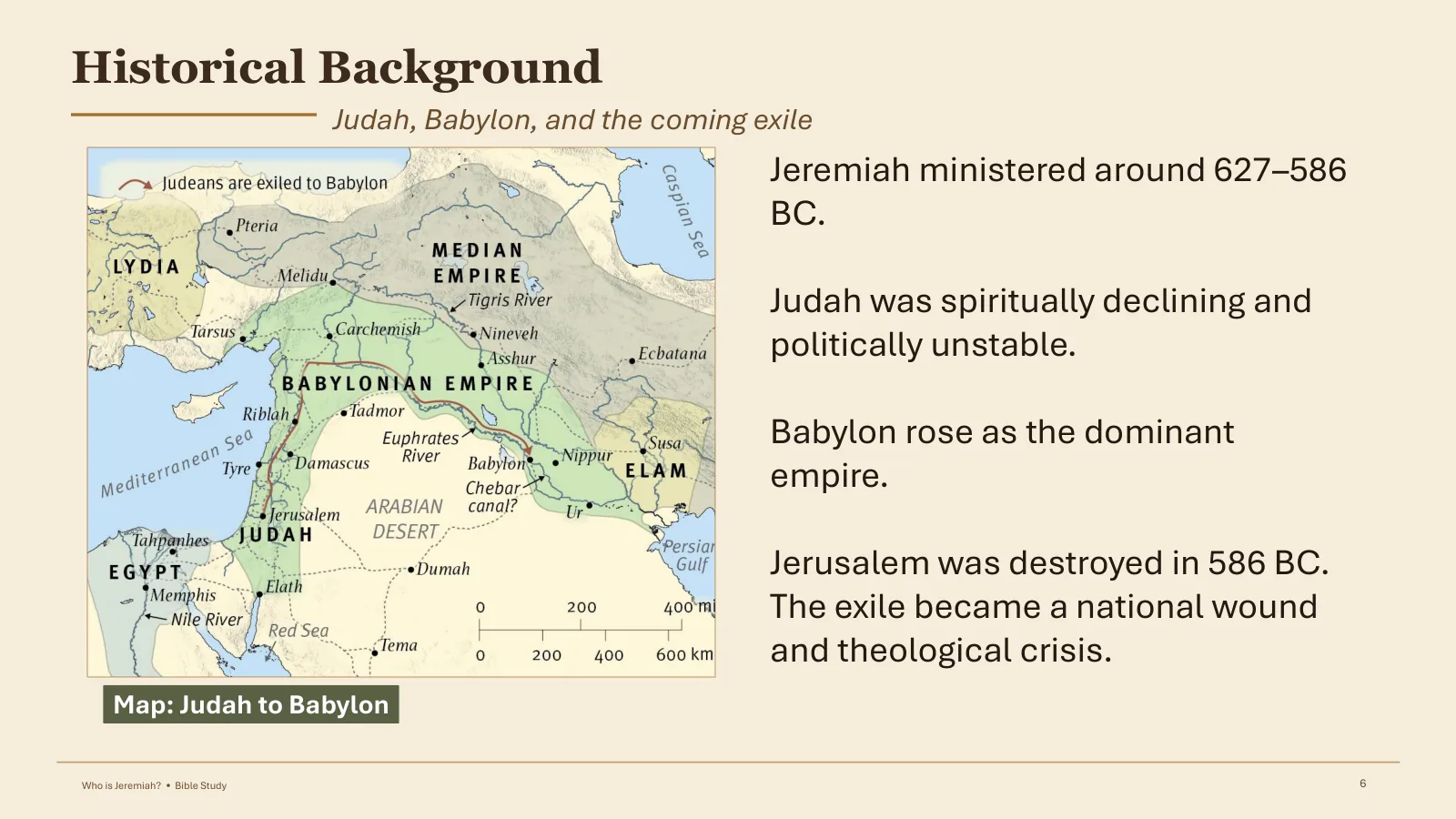
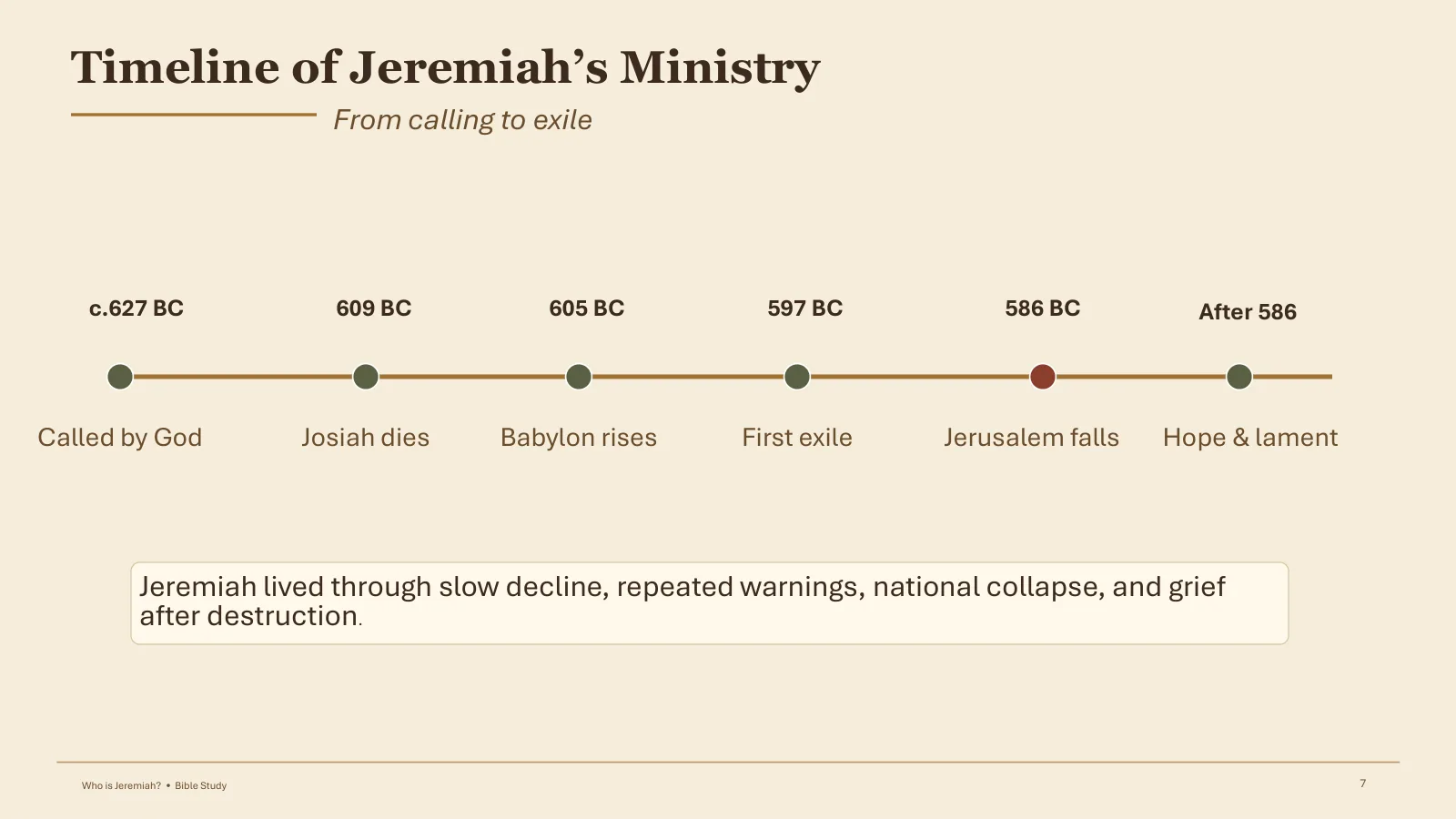
Jeremiah ministered from around 627 to 586 BC. Judah was spiritually declining and politically unstable while Babylon rose as the dominant empire. Jerusalem was destroyed in 586 BC, and the exile that followed became both a national wound and a theological crisis. Called around 627; Josiah dies in 609; Babylon rises in 605; the first exile in 597; Jerusalem falls in 586; and after that, hope and lament together. He lived through slow decline, repeated warnings, national collapse, and grief.
His mission
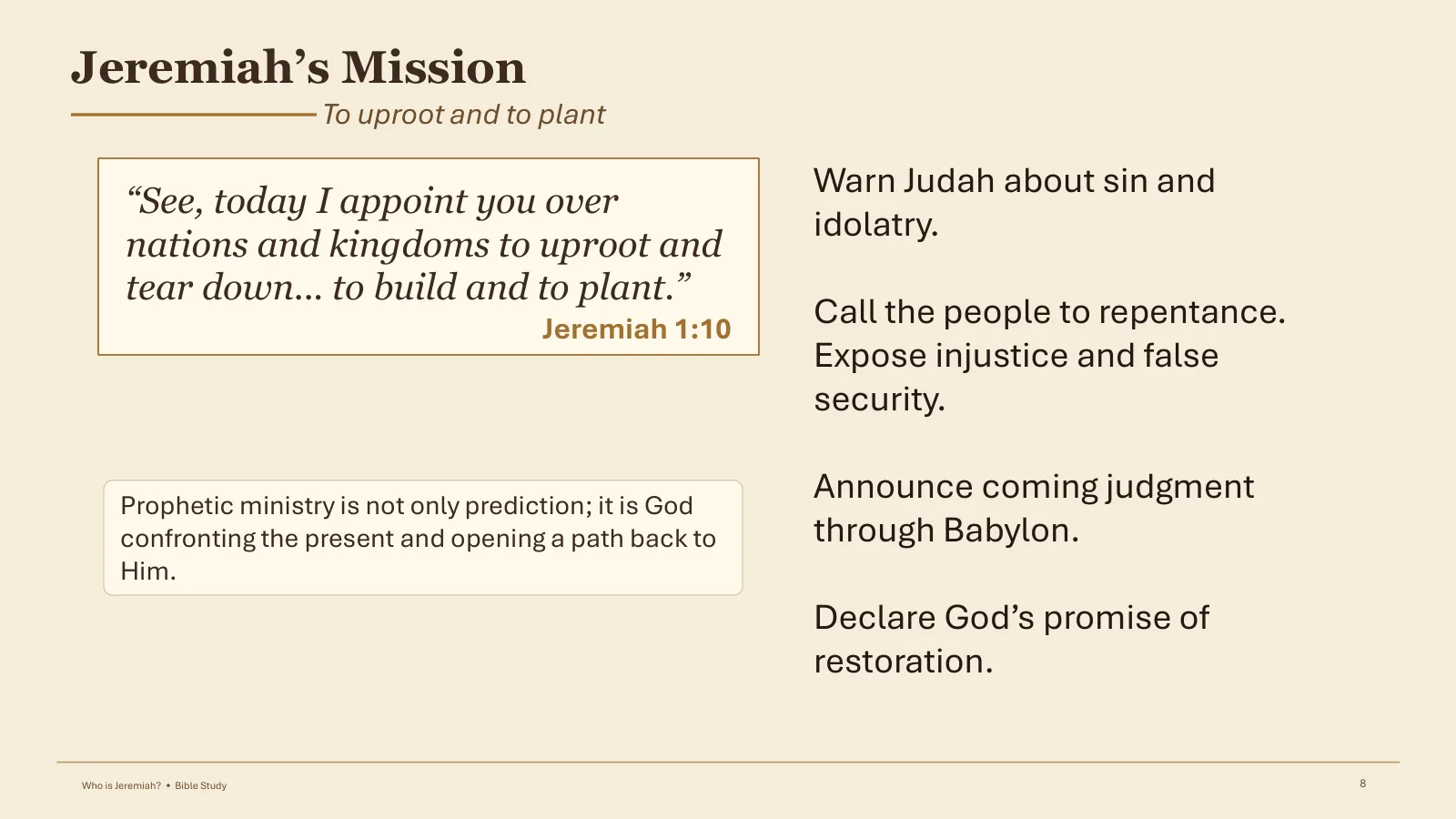
To uproot and tear down, and to build and to plant. He was to warn Judah about sin and idolatry, call the people to repentance, expose injustice and false security, announce the coming judgment through Babylon, and declare God’s promise of restoration. Prophetic ministry is not only prediction; it is God confronting the present and opening a path back to Him.
The opposition he faced
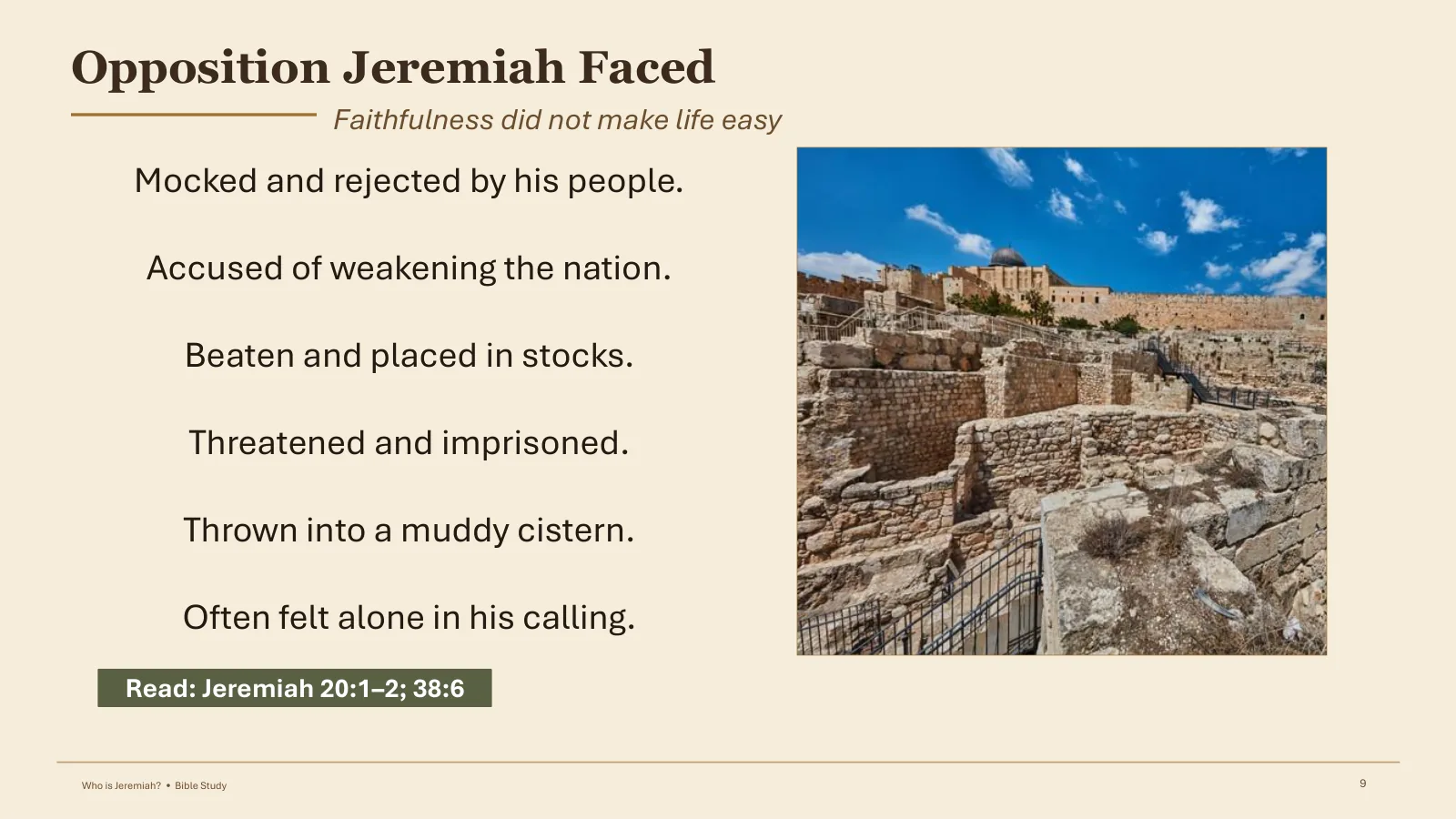
Faithfulness did not make his life easier. He was mocked and rejected by his own people, accused of weakening the nation, beaten and placed in stocks, threatened and imprisoned, and thrown into a muddy cistern. He often felt alone in his calling.
Why “the weeping prophet”?
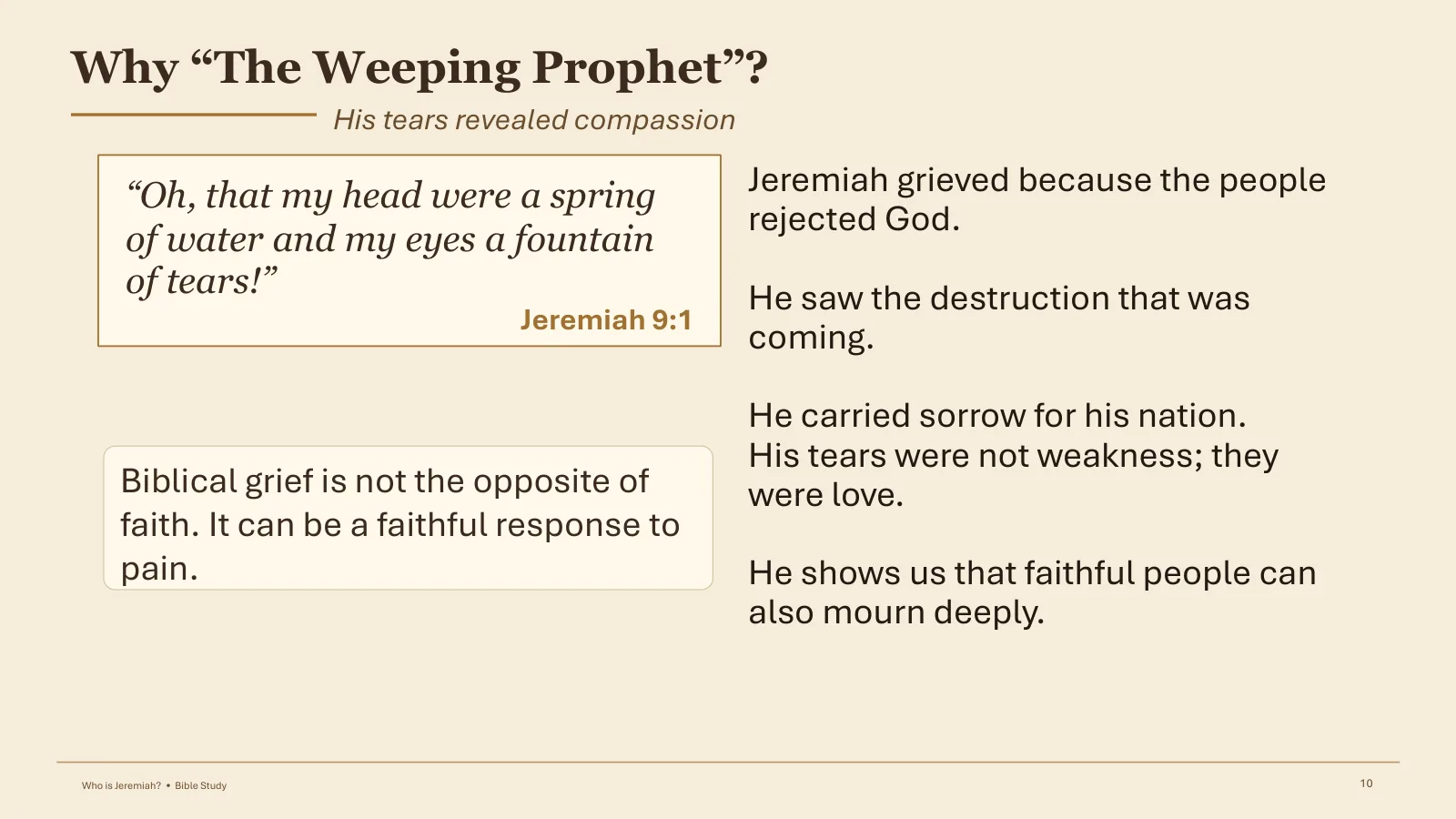
“Oh, that my head were a spring of water and my eyes a fountain of tears!” Jeremiah grieved because the people rejected God, because he could see what was coming, and because he carried sorrow for his nation. His tears were not weakness; they were love. Biblical grief is not the opposite of faith — it can be a faithful response to pain.
Jeremiah and trauma awareness
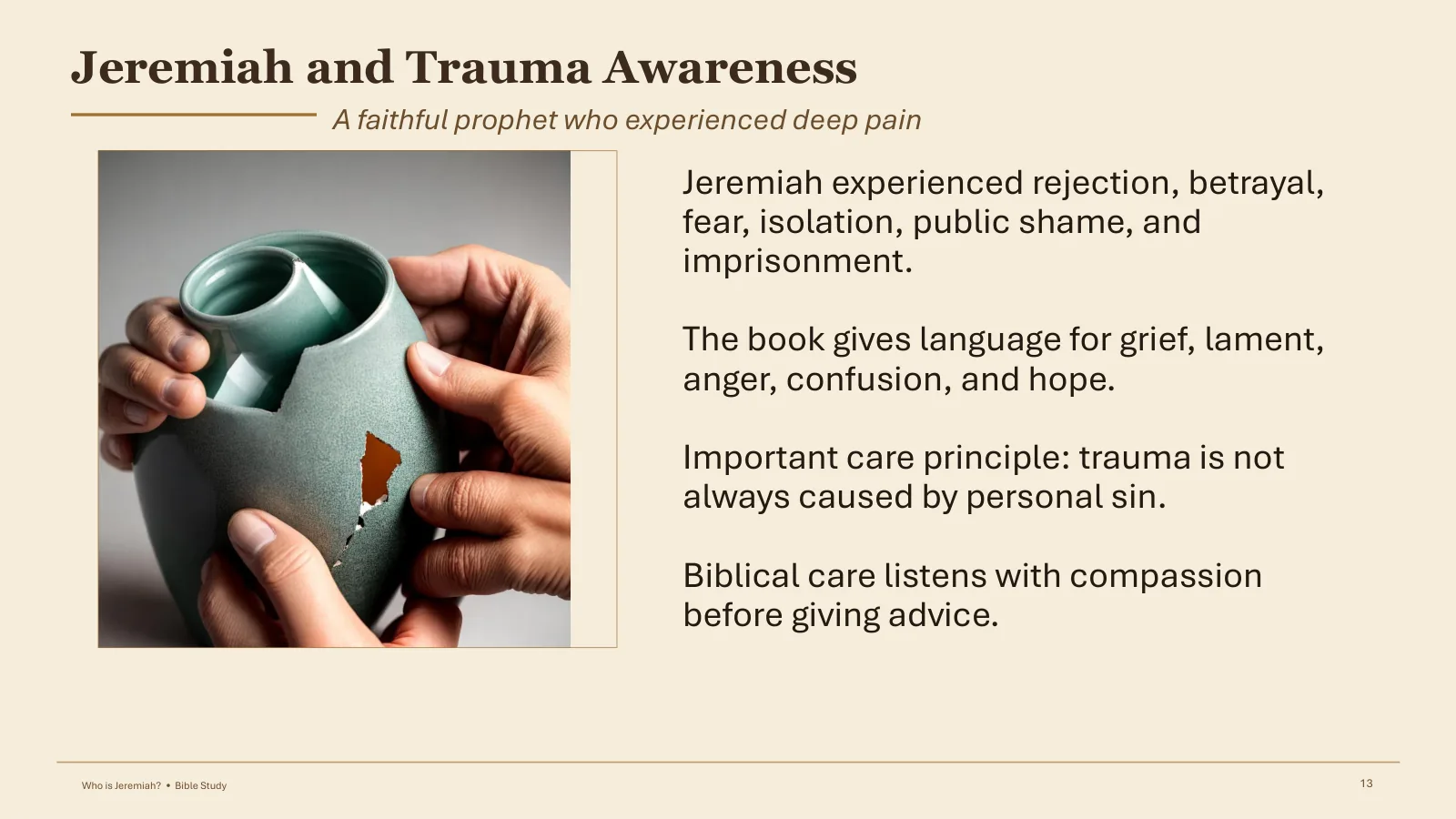
He experienced rejection, betrayal, fear, isolation, public shame and imprisonment. The book he left gives language for grief, lament, anger, confusion and hope. One care principle matters above the rest here: trauma is not always caused by personal sin. Biblical care listens with compassion before it gives advice.
A trauma lens for Bible study
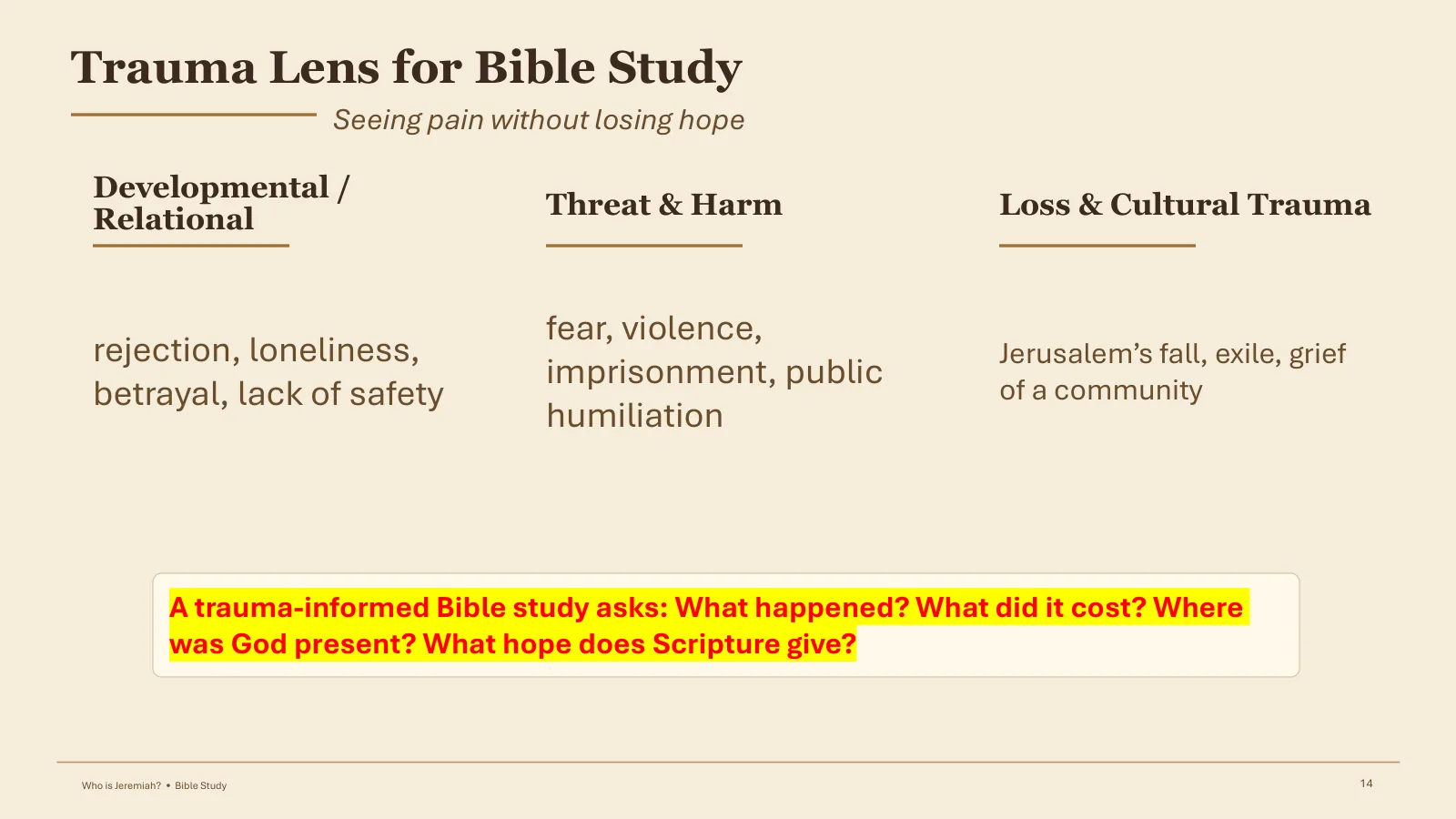
Developmental and relational wounds — rejection, loneliness, betrayal, a lack of safety. Threat and harm — fear, violence, imprisonment, public humiliation. Loss and cultural trauma — Jerusalem’s fall, exile, the grief of a whole community. A trauma-informed reading asks four questions: what happened, what did it cost, where was God present, and what hope does Scripture give?
Emotional healing in Jeremiah
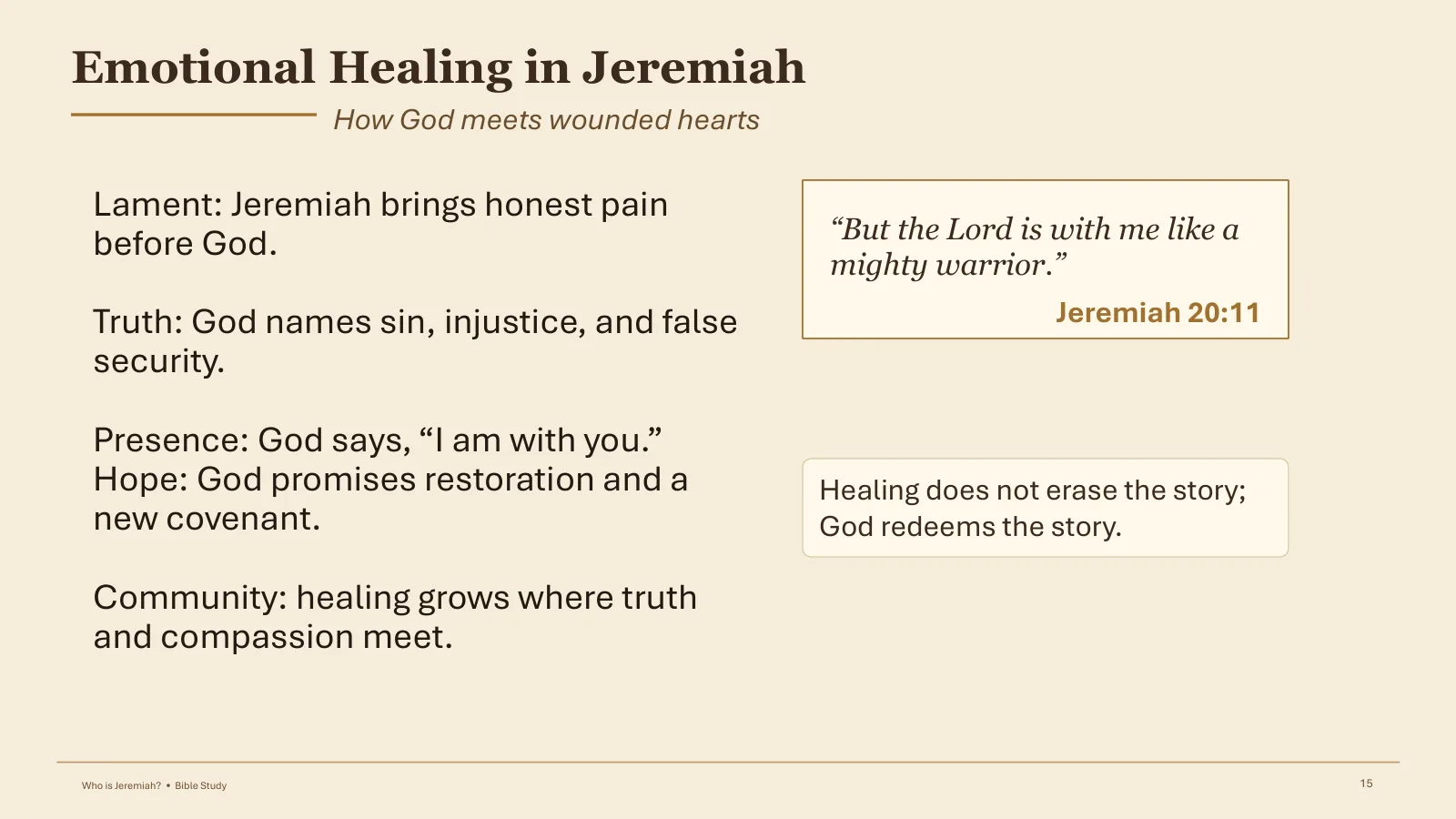
Lament — he brings honest pain before God. Truth — God names sin, injustice and false security. Presence — God says, “I am with you.” Hope — God promises restoration and a new covenant. Community — healing grows where truth and compassion meet. Healing does not erase the story; God redeems the story.
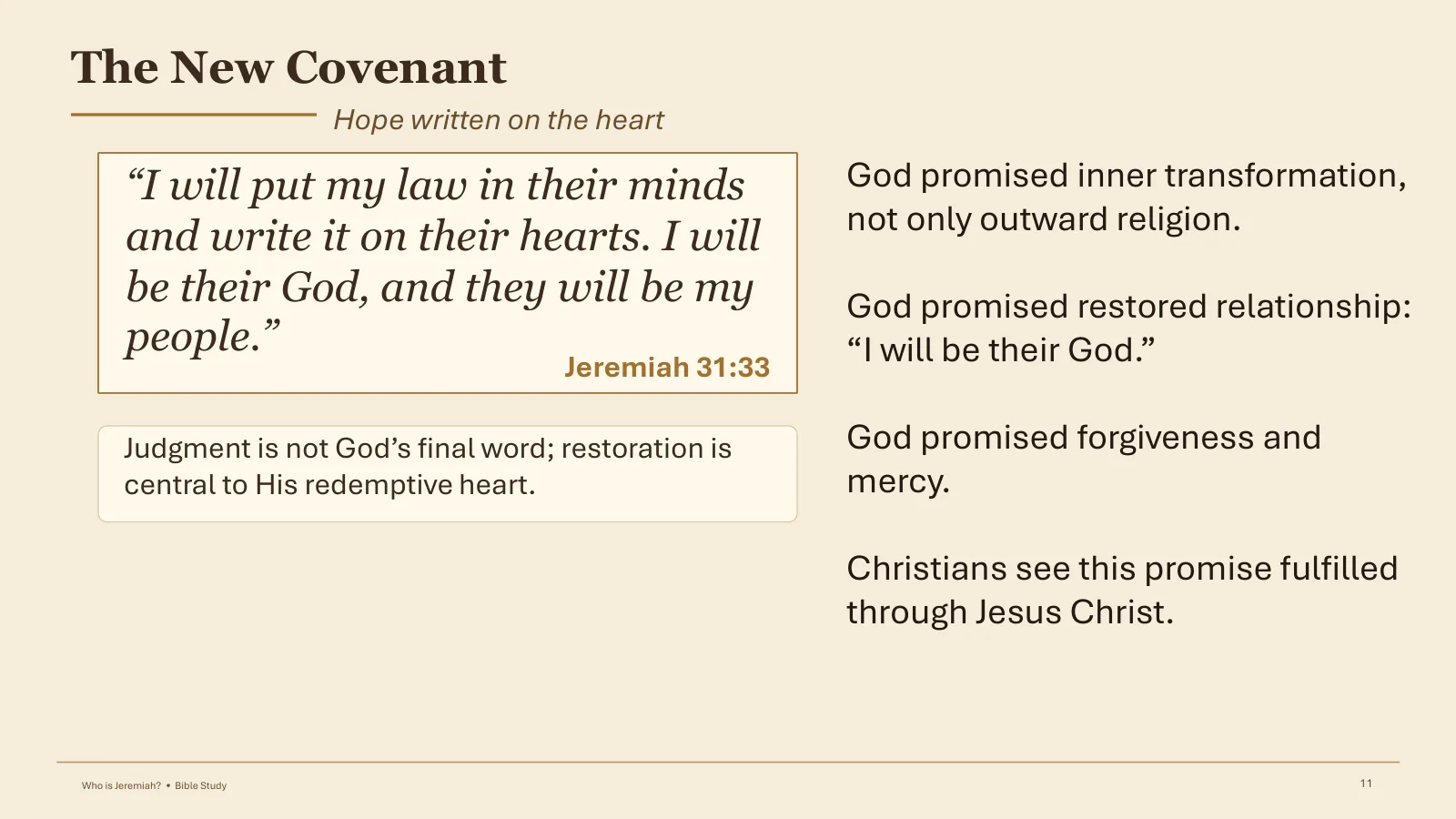
I will put my law in their minds and write it on their hearts. I will be their God, and they will be my people.
Jeremiah 31:33The new covenant
God promised inner transformation, not merely outward religion. He promised restored relationship — “I will be their God” — and forgiveness and mercy. Christians see this promise fulfilled in Jesus Christ. Judgment is not God’s final word; restoration is central to His redemptive heart.
Reflection
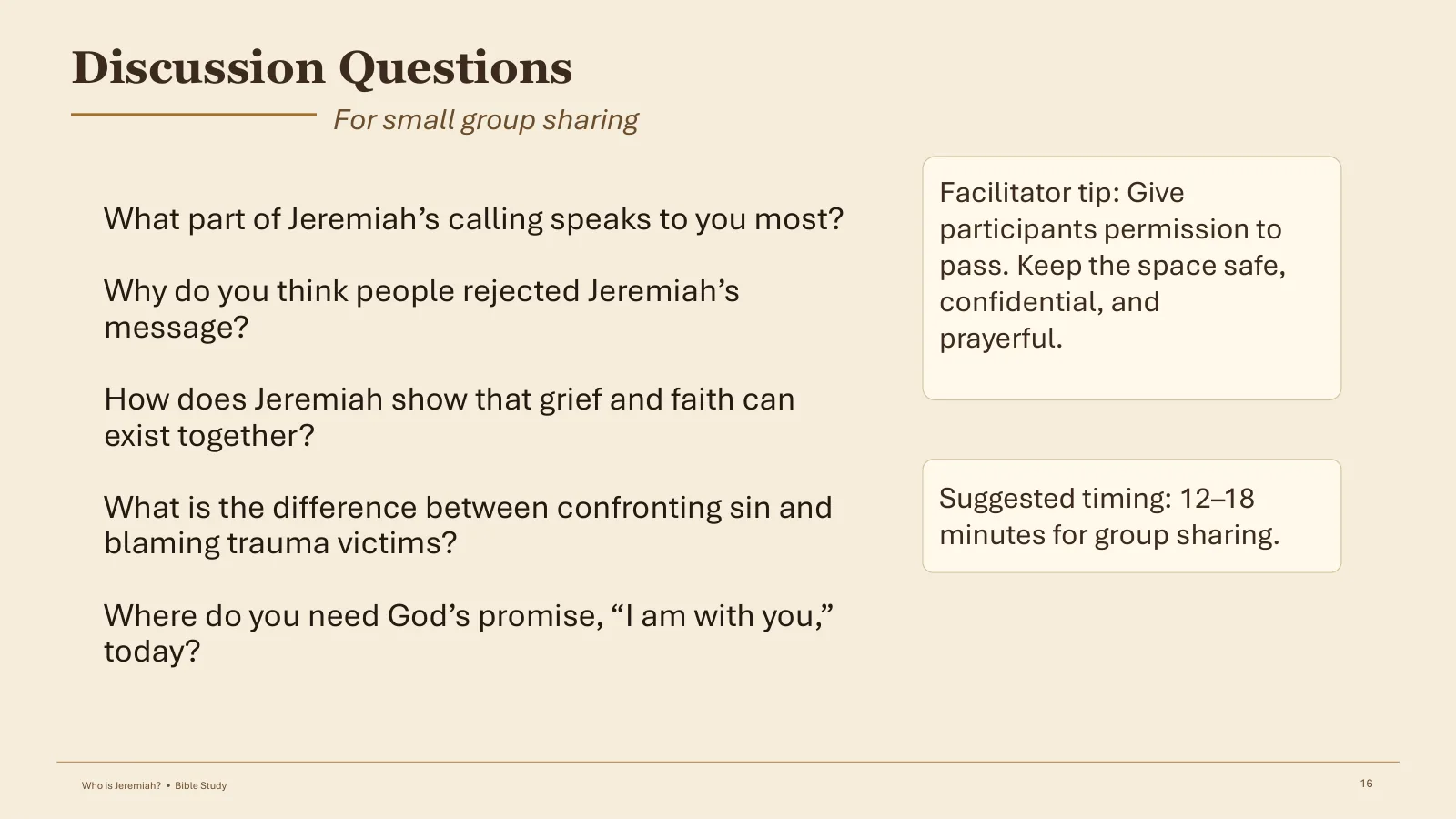
- What part of Jeremiah’s calling speaks to you most?
- Why do you think people rejected Jeremiah’s message?
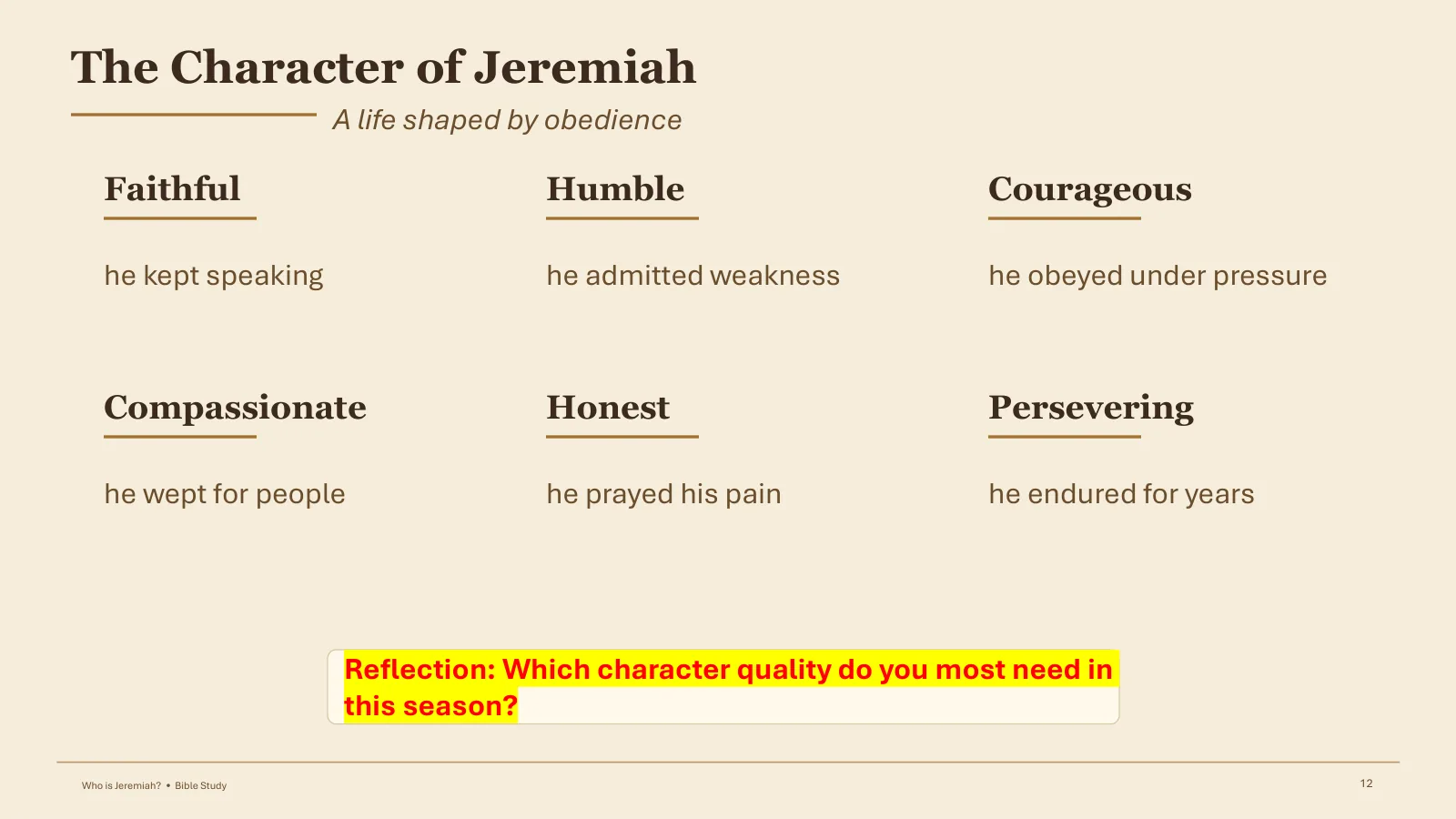
- How does Jeremiah show that grief and faith can exist together?
- What is the difference between confronting sin and blaming someone for their trauma?
- Where do you need God’s promise, “I am with you,” today?
Challenge
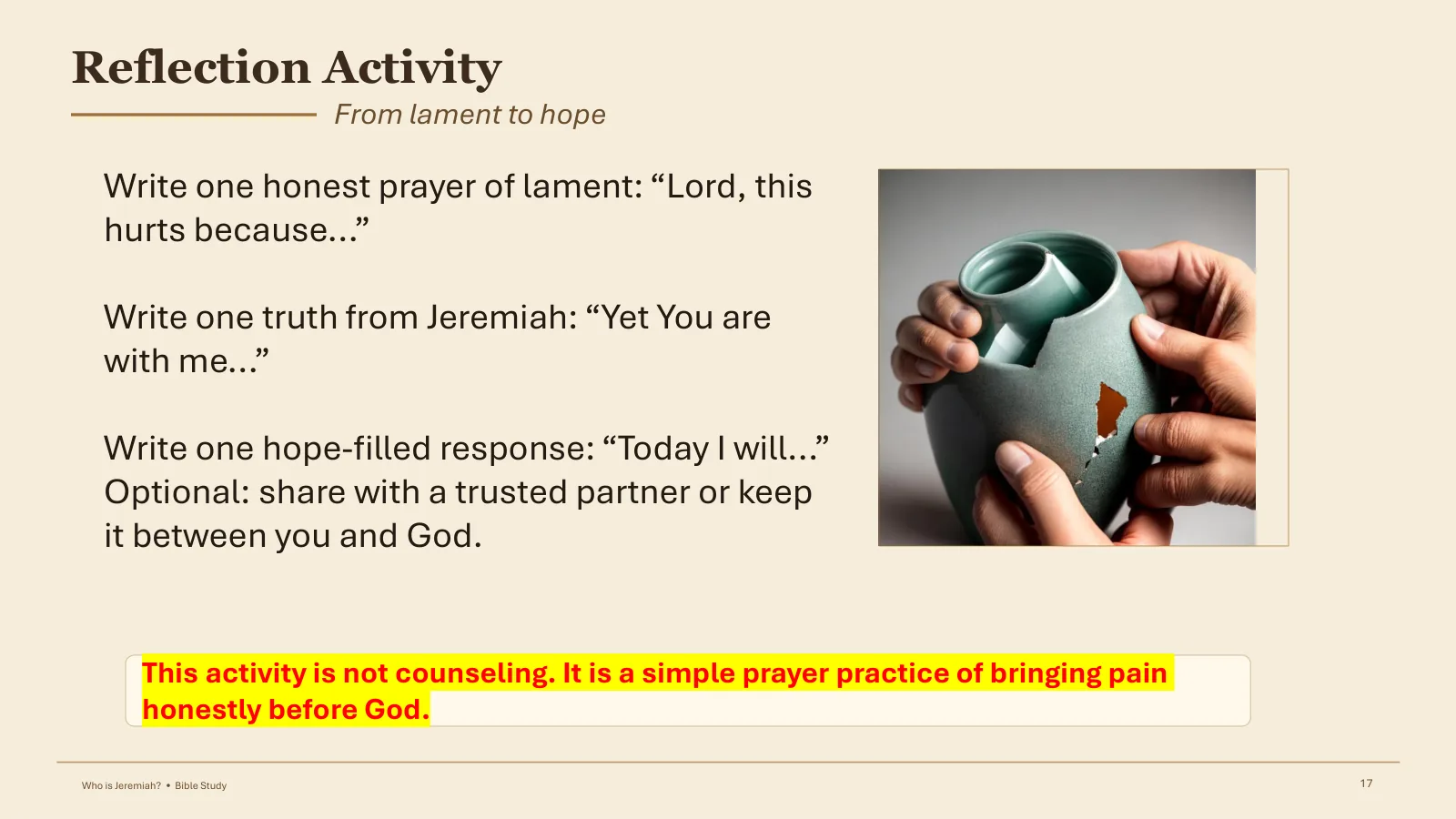
Write one honest prayer of lament — “Lord, this hurts because…” Then one truth from Jeremiah — “Yet You are with me…” Then one hope-filled response — “Today I will…” Share it with someone you trust, or keep it between you and God. This is not counseling; it is a simple practice of bringing pain honestly before Him.
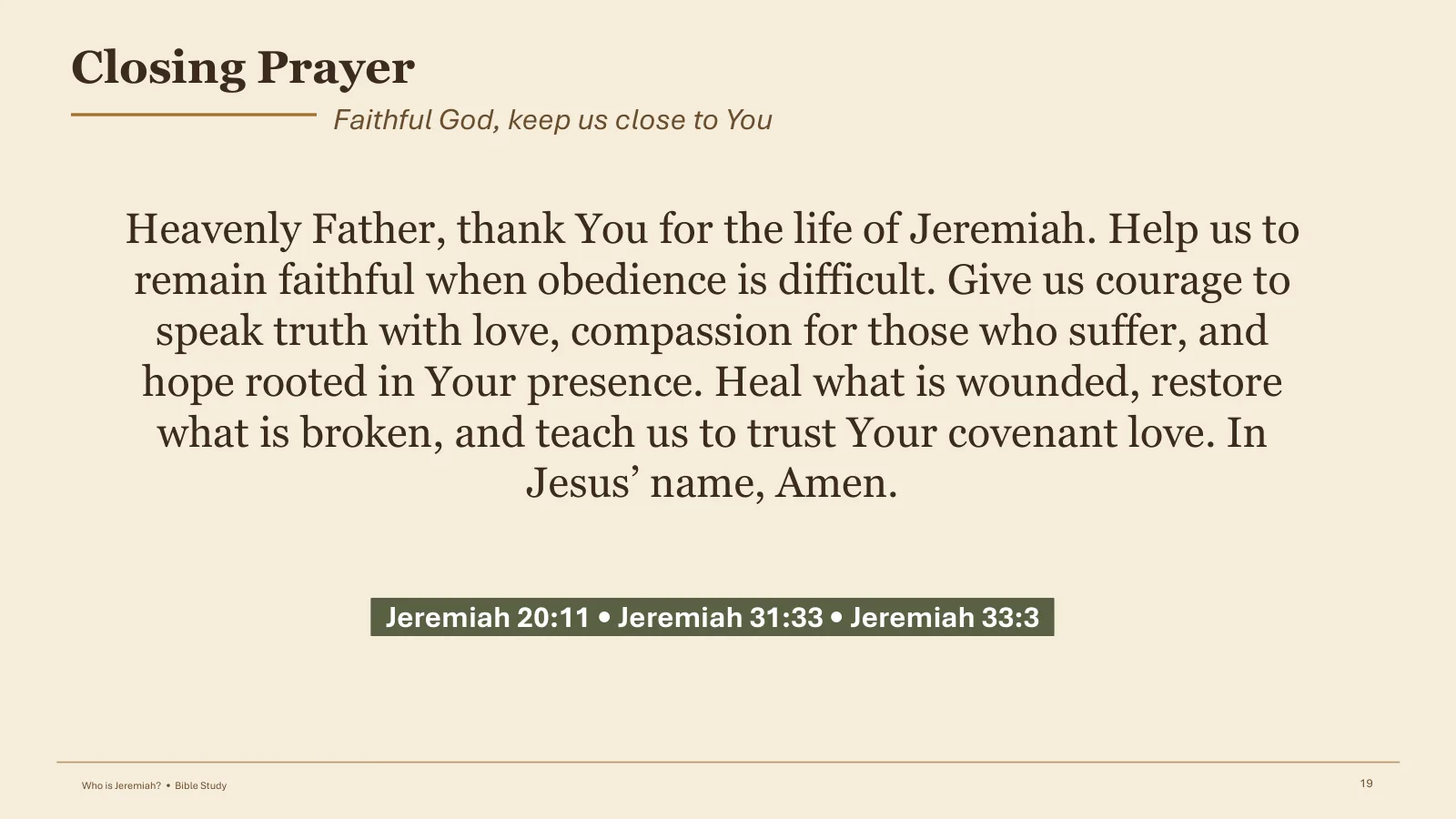
Heavenly Father, thank You for the life of Jeremiah. Help us to remain faithful when obedience is difficult. Give us courage to speak truth with love, compassion for those who suffer, and hope rooted in Your presence. Heal what is wounded, restore what is broken, and teach us to trust Your covenant love. In Jesus’ name, Amen.
PrayerSlides
Browse the teaching slides
Swipe, or use the arrows. 19 slides.
A note before you download
These materials are offered for spiritual formation and group study. They are not counseling and are not a substitute for professional care. If you are carrying something heavy, we would be glad to walk with you — reach out to us — and we encourage seeking qualified professional help alongside prayer and community.
Session 5 handoutPDF · A5 · for printing and offline readingDownload ↓