
Session 1 of 6
The Many Faces of Trauma
Understanding how trauma forms and the many shapes it takes
Focus
Childhood, emotional, physical, generational, social and cultural trauma; loss and grief; pathways to healing.
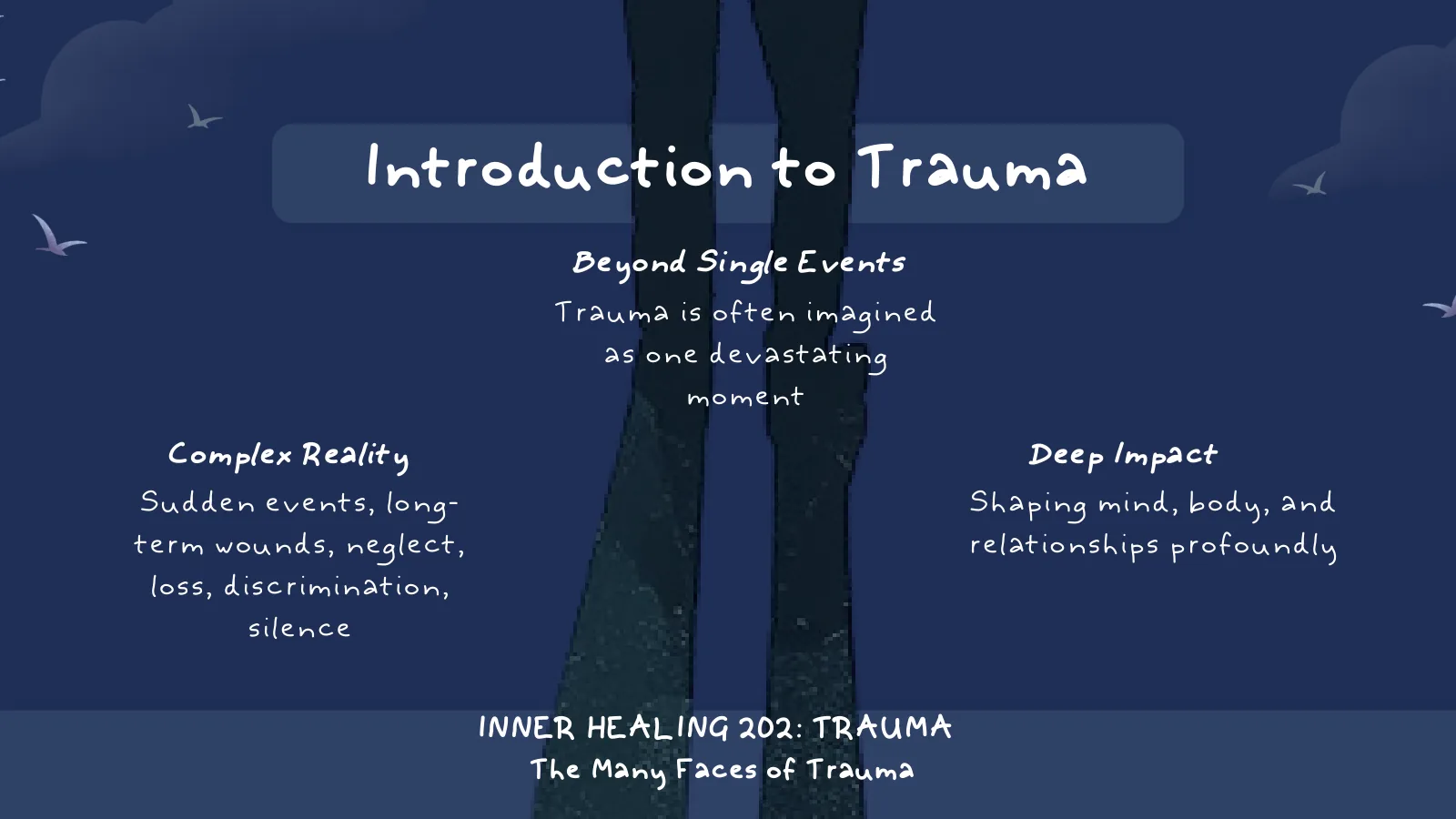
Beyond a single event
Trauma is often imagined as one devastating moment — the accident, the phone call, the day everything changed. In truth it takes many forms. Sudden events, yes, but also long-term wounds, neglect, loss, discrimination, and silence. It shapes the mind, the body, and the way we relate to other people, often for years afterwards.
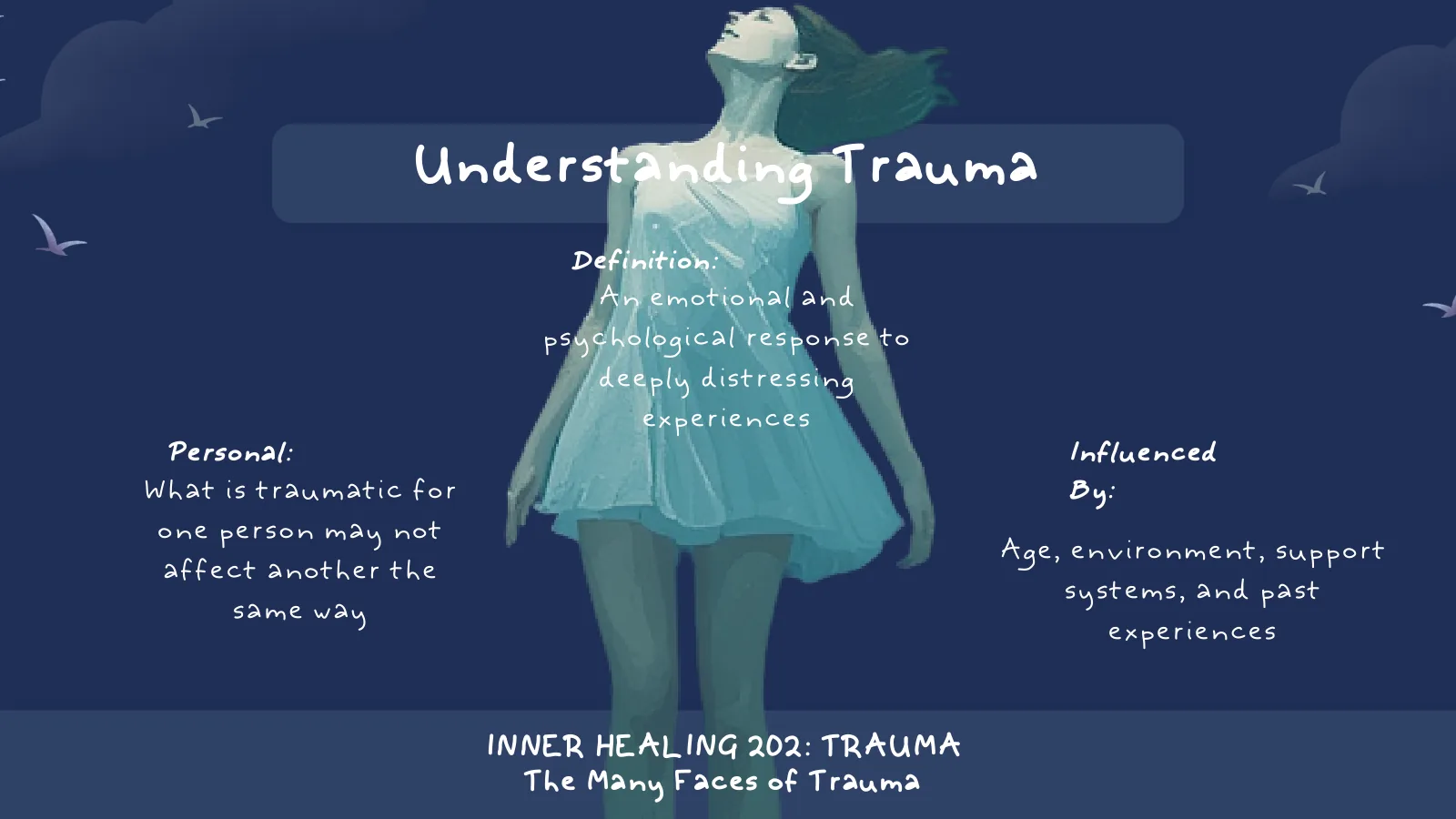
What trauma is
Trauma is an emotional and psychological response to deeply distressing experiences. It is also personal: what is traumatic for one person may not affect another the same way, and that difference is not a measure of anyone’s strength. Age, environment, support systems and past experiences all shape how an event lands.
Childhood trauma
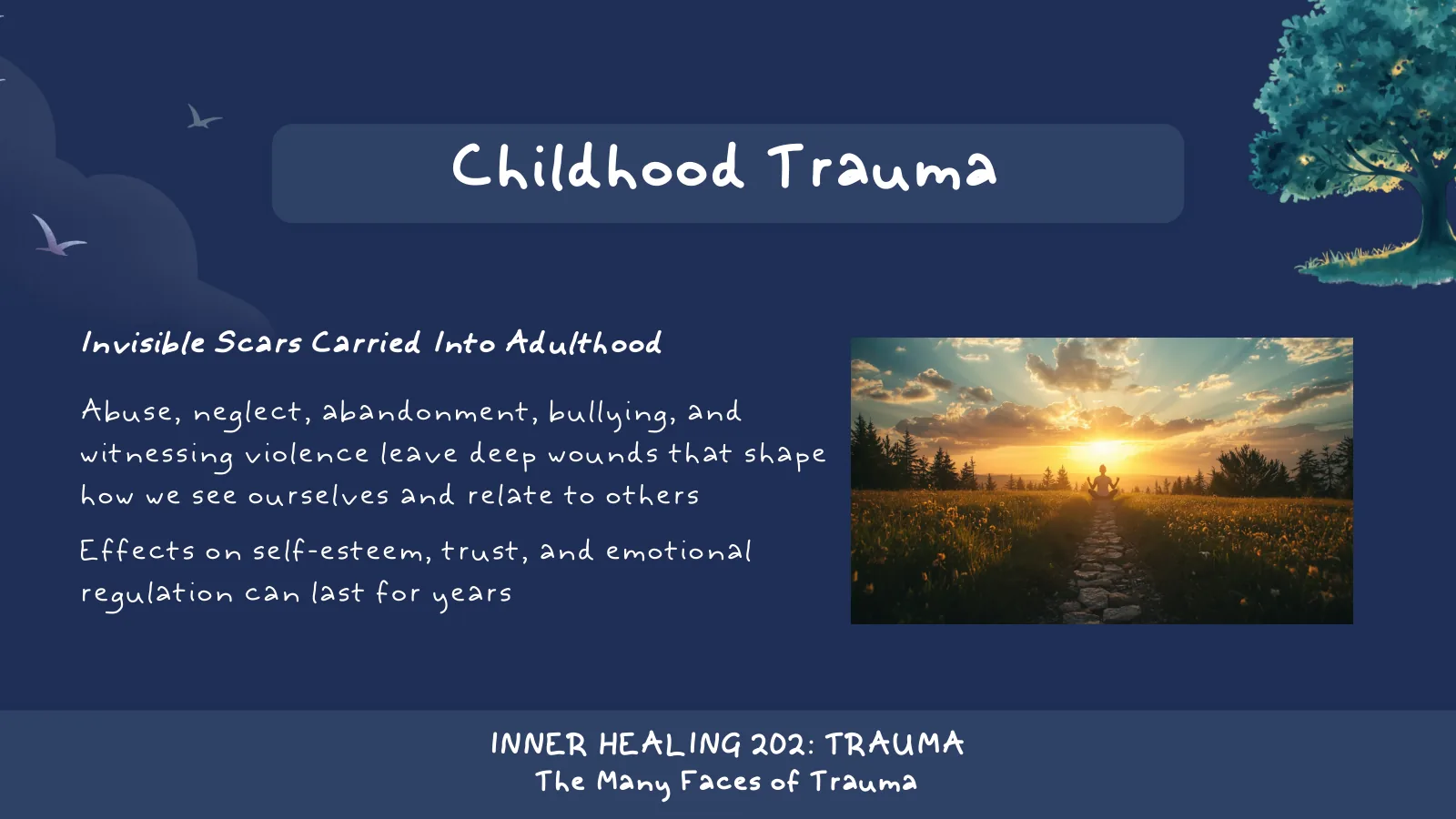
Invisible scars carried into adulthood
Abuse, neglect, abandonment, bullying and witnessing violence leave deep wounds that shape how we see ourselves and relate to others. The effects on self-esteem, trust and emotional regulation can last for years after the events themselves have ended.
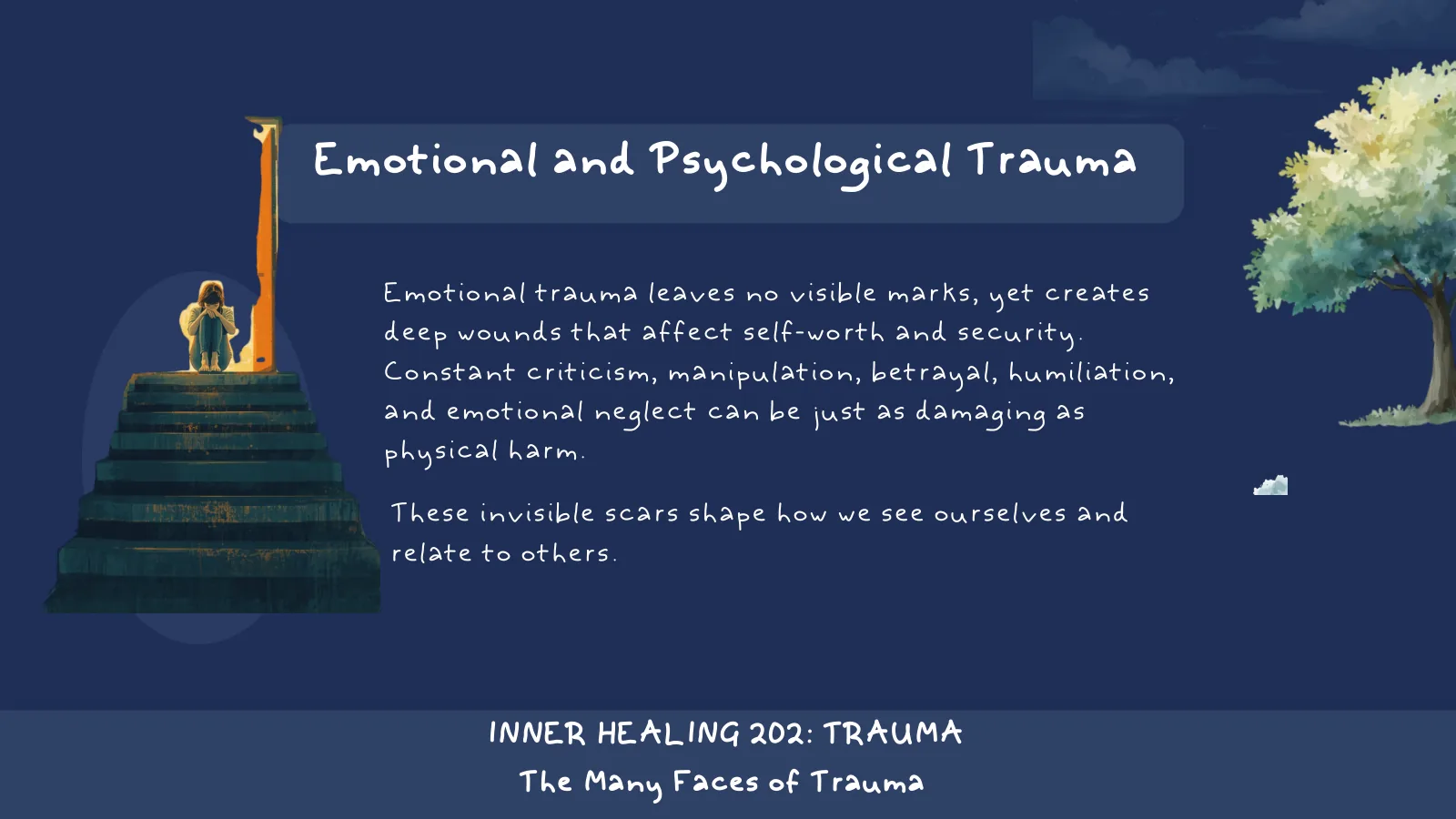
Emotional and psychological trauma
Emotional trauma leaves no visible marks, yet creates deep wounds that affect self-worth and security. Constant criticism, manipulation, betrayal, humiliation and emotional neglect can be just as damaging as physical harm. These invisible scars shape how we see ourselves and relate to others.
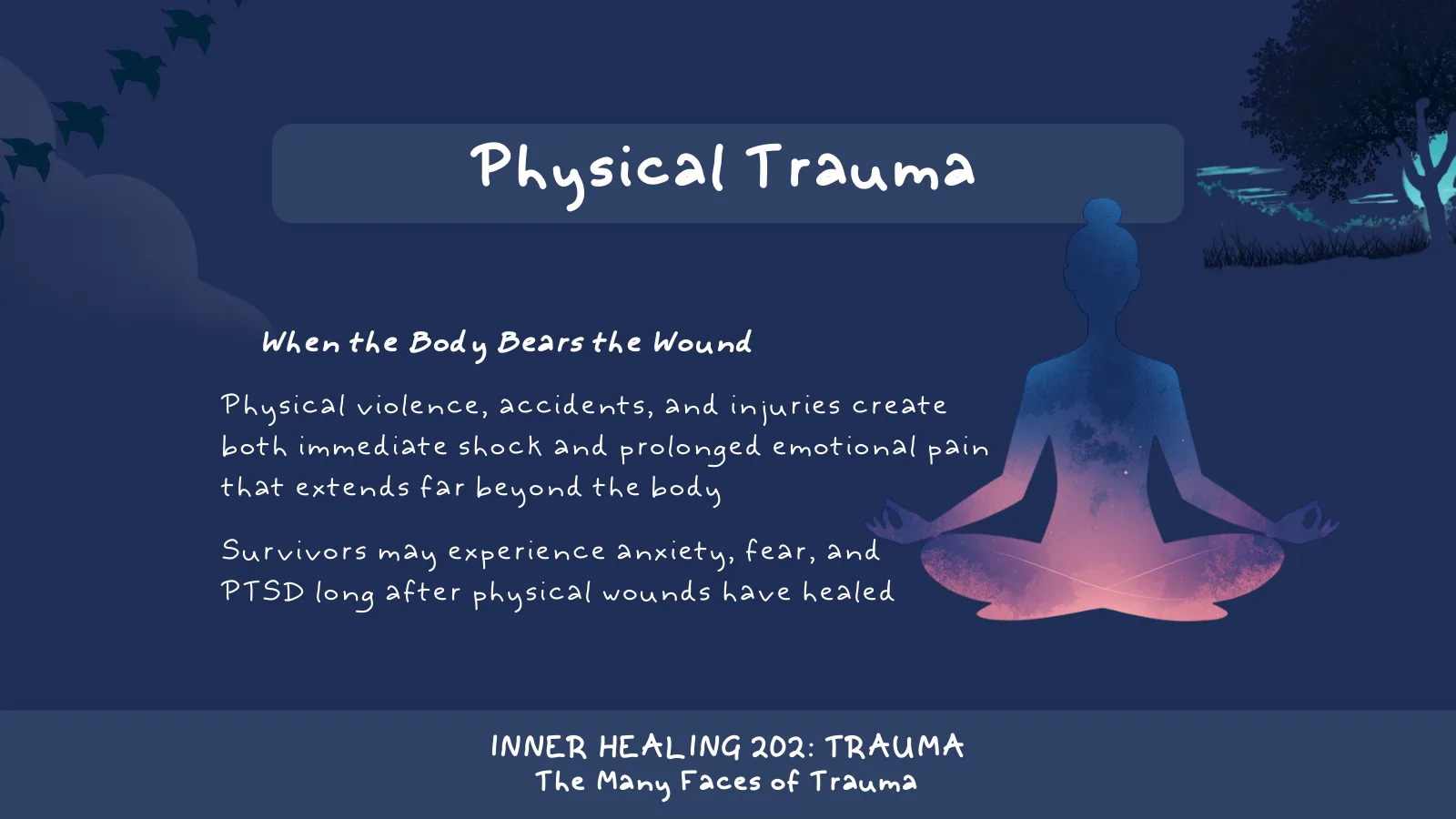
Physical trauma
When the body bears the wound
Physical violence, accidents and injuries create both immediate shock and prolonged emotional pain that extends far beyond the body. Survivors may experience anxiety, fear and PTSD long after the physical wounds have healed.
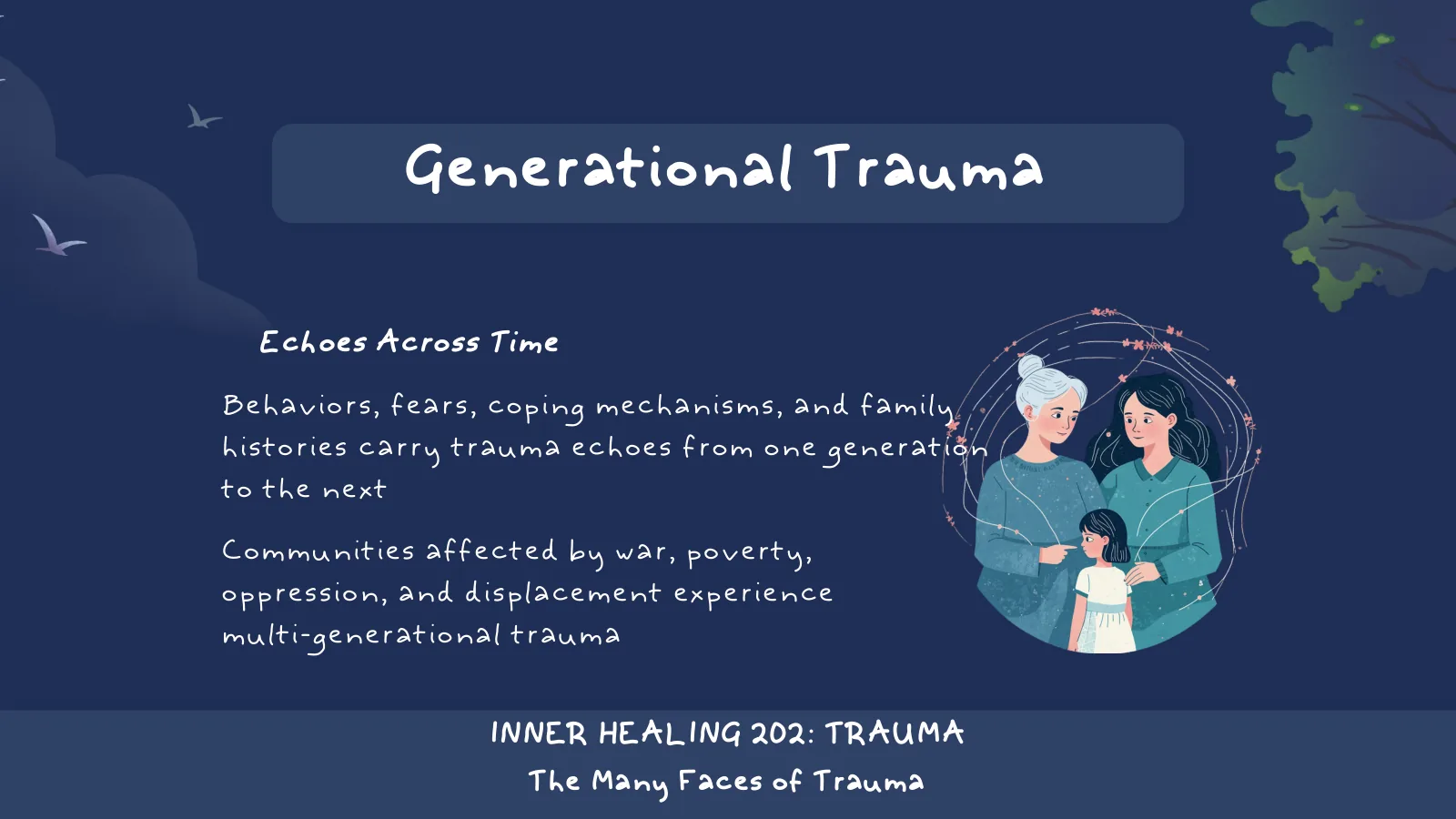
Generational trauma
Echoes across time
Behaviours, fears, coping mechanisms and family histories carry trauma echoes from one generation to the next. Communities affected by war, poverty, oppression and displacement experience it across multiple generations.
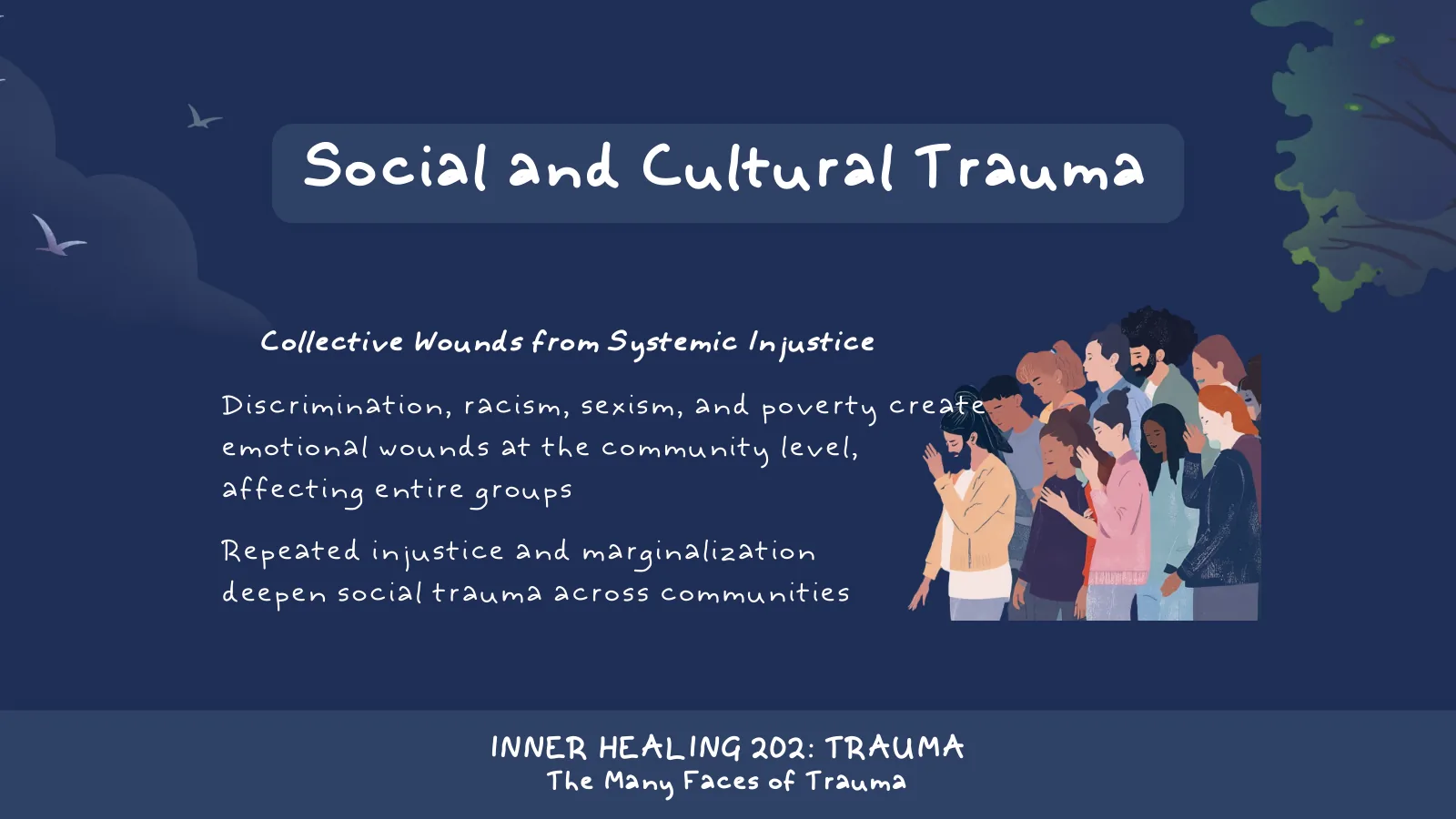
Social and cultural trauma
Collective wounds from systemic injustice
Discrimination, racism, sexism and poverty create emotional wounds at the community level, affecting entire groups rather than individuals alone. Repeated injustice and marginalisation deepen social trauma across communities.
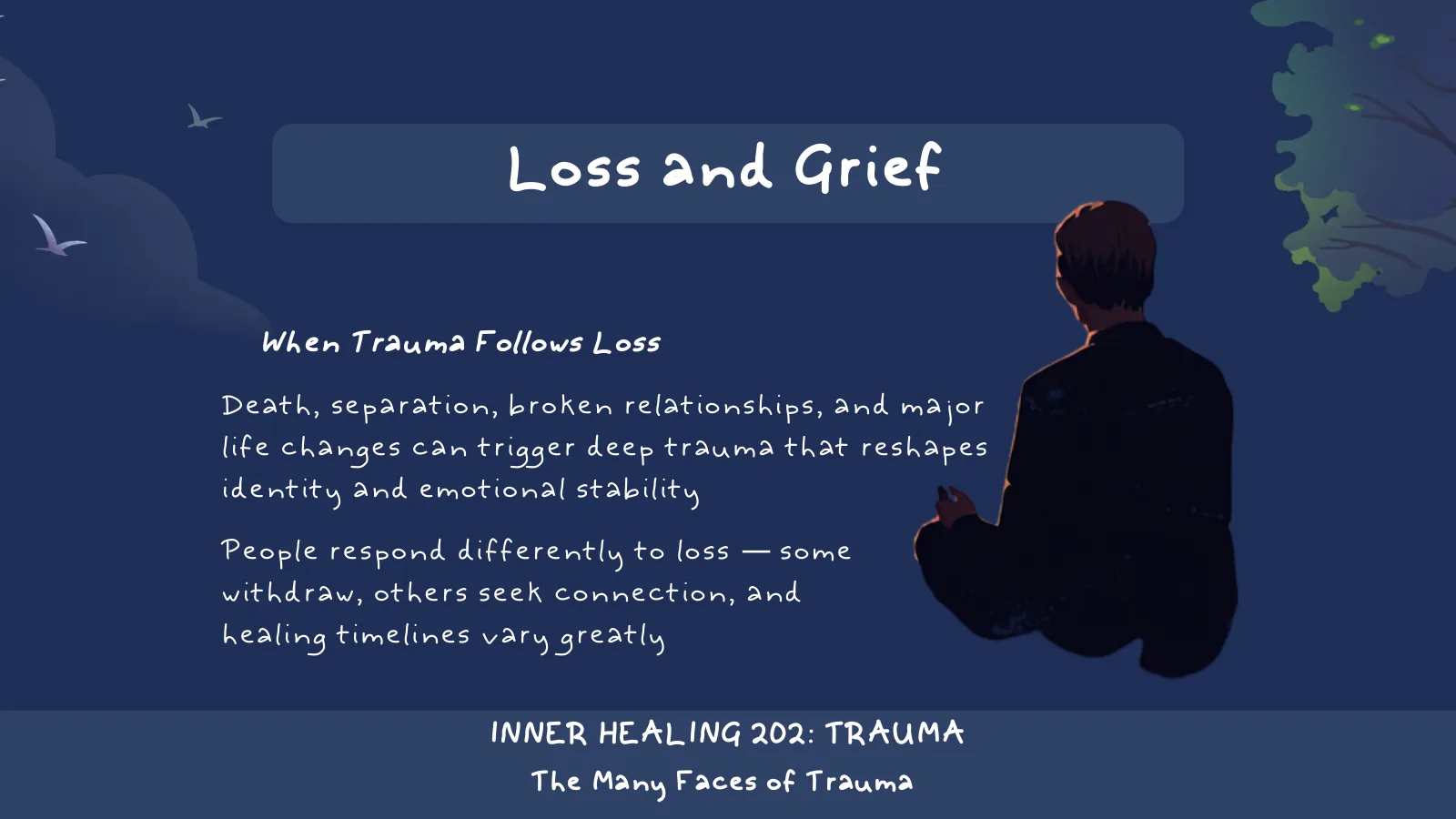
Loss and grief
When trauma follows loss
Death, separation, broken relationships and major life changes can trigger deep trauma that reshapes identity and emotional stability. People respond differently to loss — some withdraw, others seek connection — and healing timelines vary greatly. There is no schedule that grief is supposed to keep.
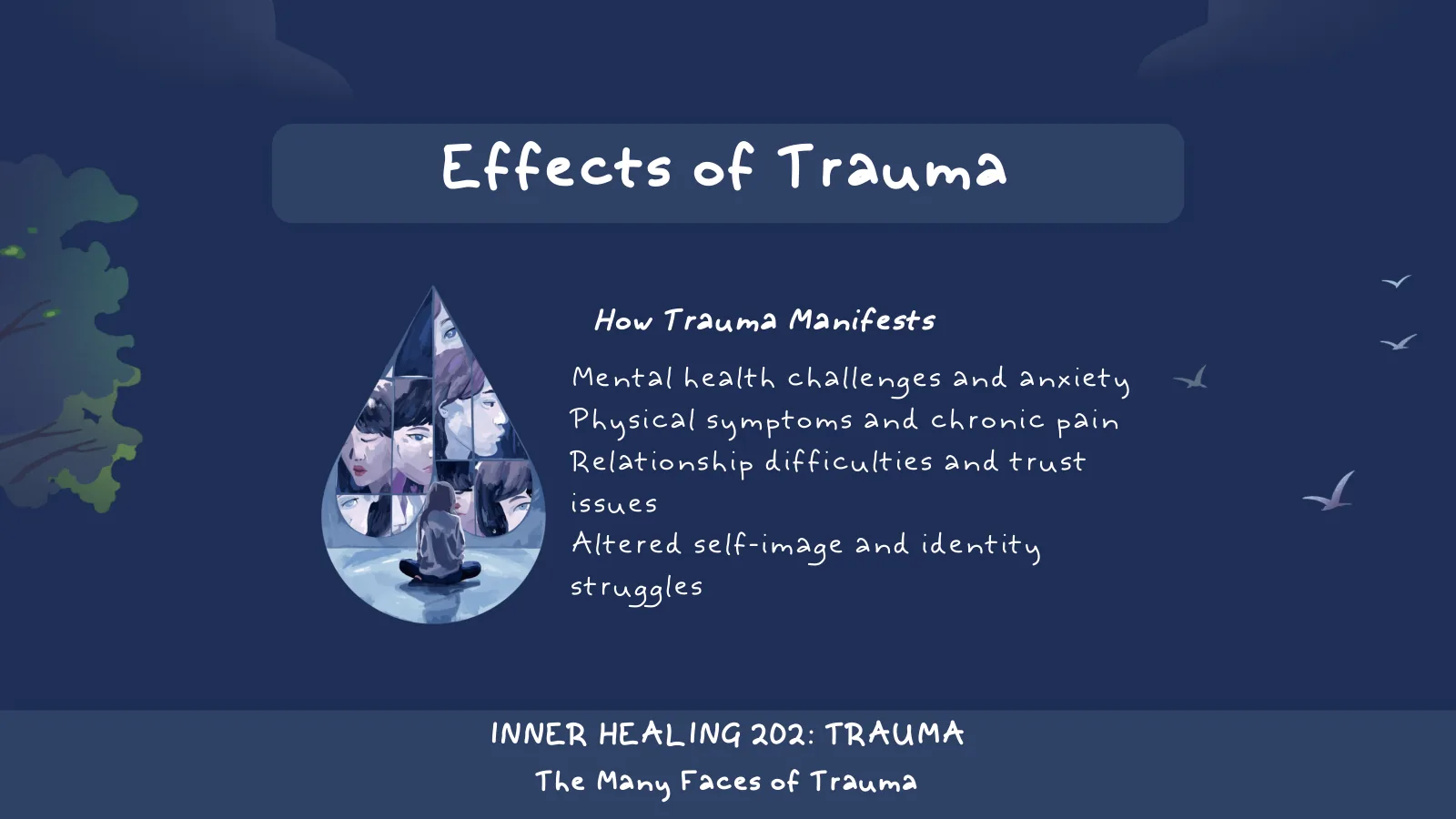
How trauma shows itself
It surfaces as mental health challenges and anxiety; as physical symptoms and chronic pain; as relationship difficulties and trouble trusting; and as an altered self-image and a struggle over identity. Much of this is invisible from the outside.
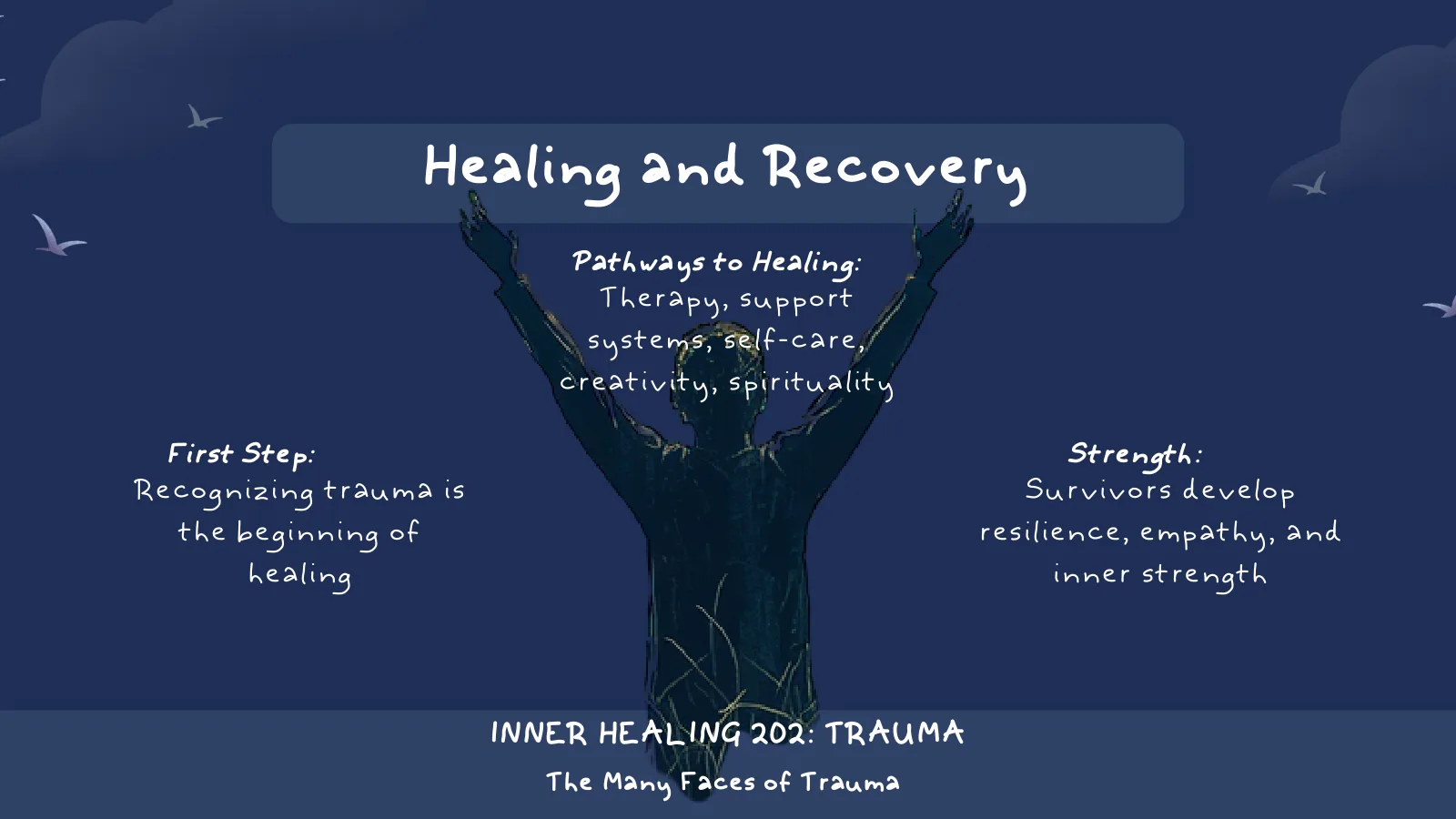
Healing and recovery
There are real pathways: therapy, support systems, self-care, creativity and spirituality. The first step is recognising trauma for what it is — that recognition is itself the beginning of healing. And survivors do not only recover; many develop resilience, empathy and a particular kind of inner strength.
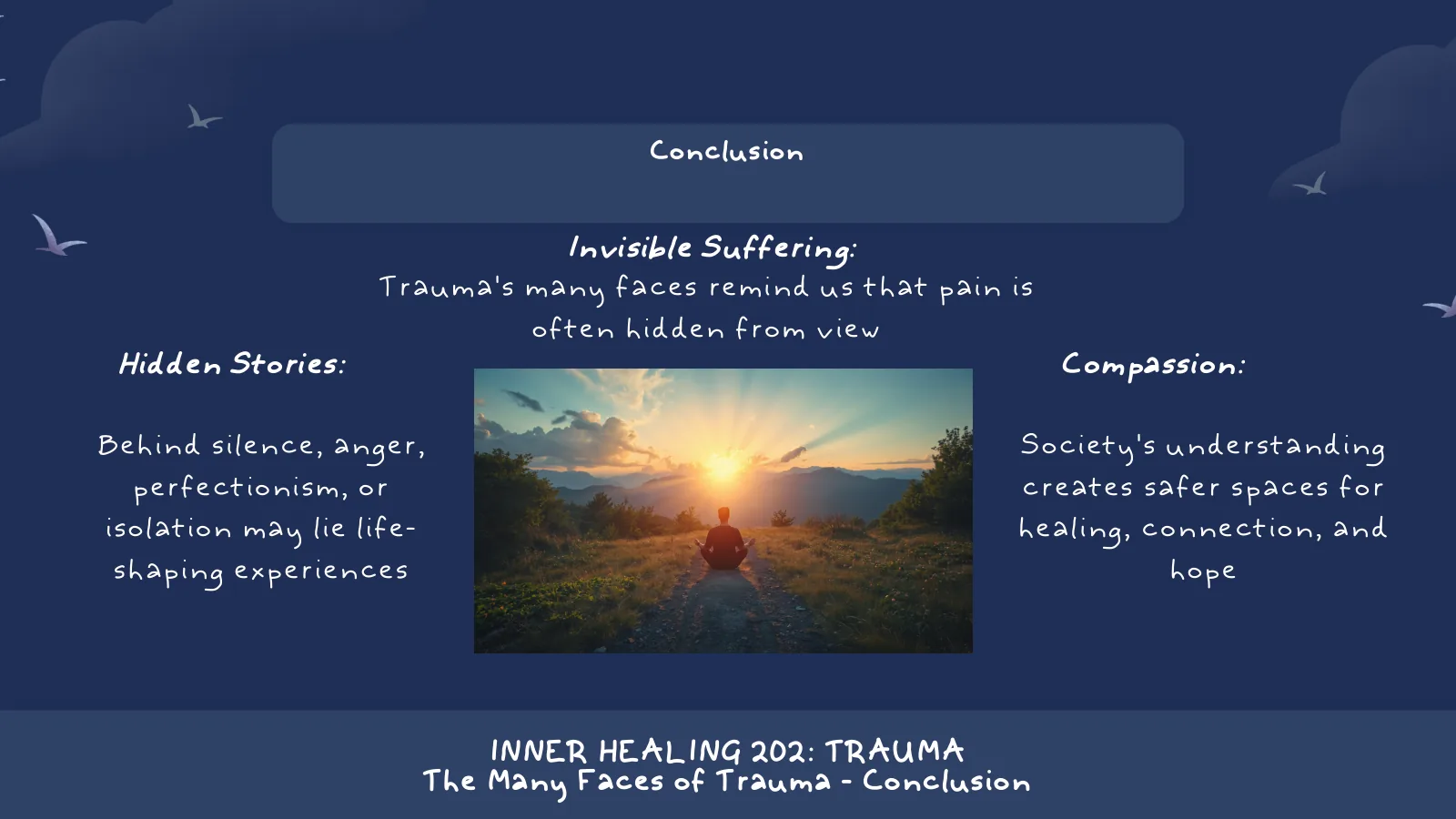
Why this matters for the church
Trauma’s many faces remind us that pain is often hidden from view. Behind silence, anger, perfectionism or isolation may lie experiences that have shaped a whole life. When a community understands that, it becomes a safer place for healing, connection and hope.
Reflection
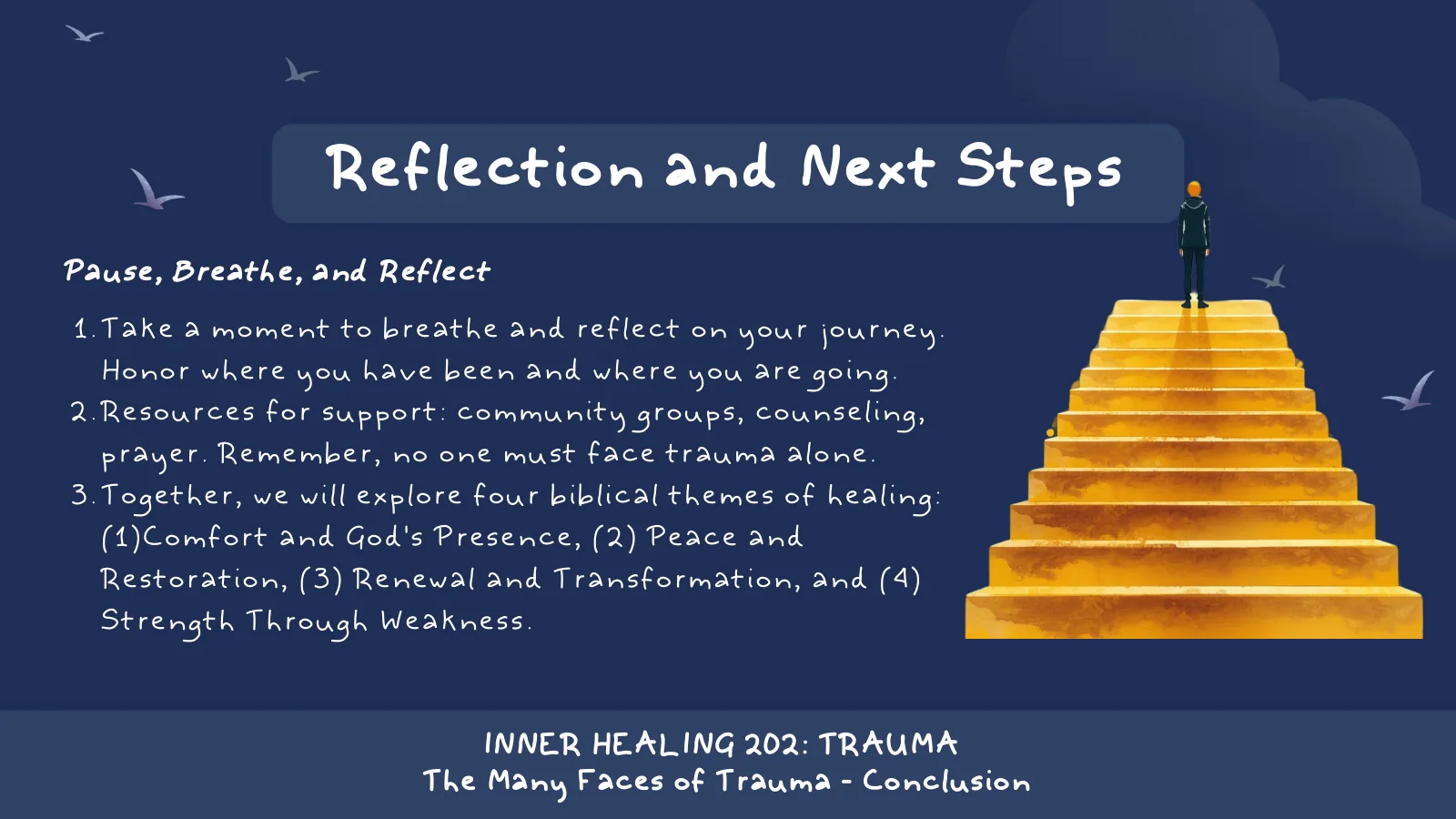
- Take a moment to breathe and reflect on your own journey. Honour where you have been and where you are going.
- Which of these forms of trauma gave you language for something you had not named before?
- Who around you might be carrying something you have not been able to see?
Challenge
No one must face trauma alone. This week, notice one person whose silence, anger or withdrawal you had read as a character trait — and consider that it may be a wound. Offer them patience rather than a diagnosis.
Slides
Browse the teaching slides
Swipe, or use the arrows. 14 slides.
A note before you download
These materials are offered for spiritual formation and group study. They are not counseling and are not a substitute for professional care. If you are carrying something heavy, we would be glad to walk with you — reach out to us — and we encourage seeking qualified professional help alongside prayer and community.
Session 1 handoutPDF · A5 · for printing and offline readingDownload ↓