
Session 2 of 6
Developmental Trauma: Understanding Early Wounds
Early wounds, attachment, and the cycles they set in motion
Focus
Childhood and neglect trauma, betrayal by caregivers, attachment patterns, intergenerational cycles.
What developmental trauma covers
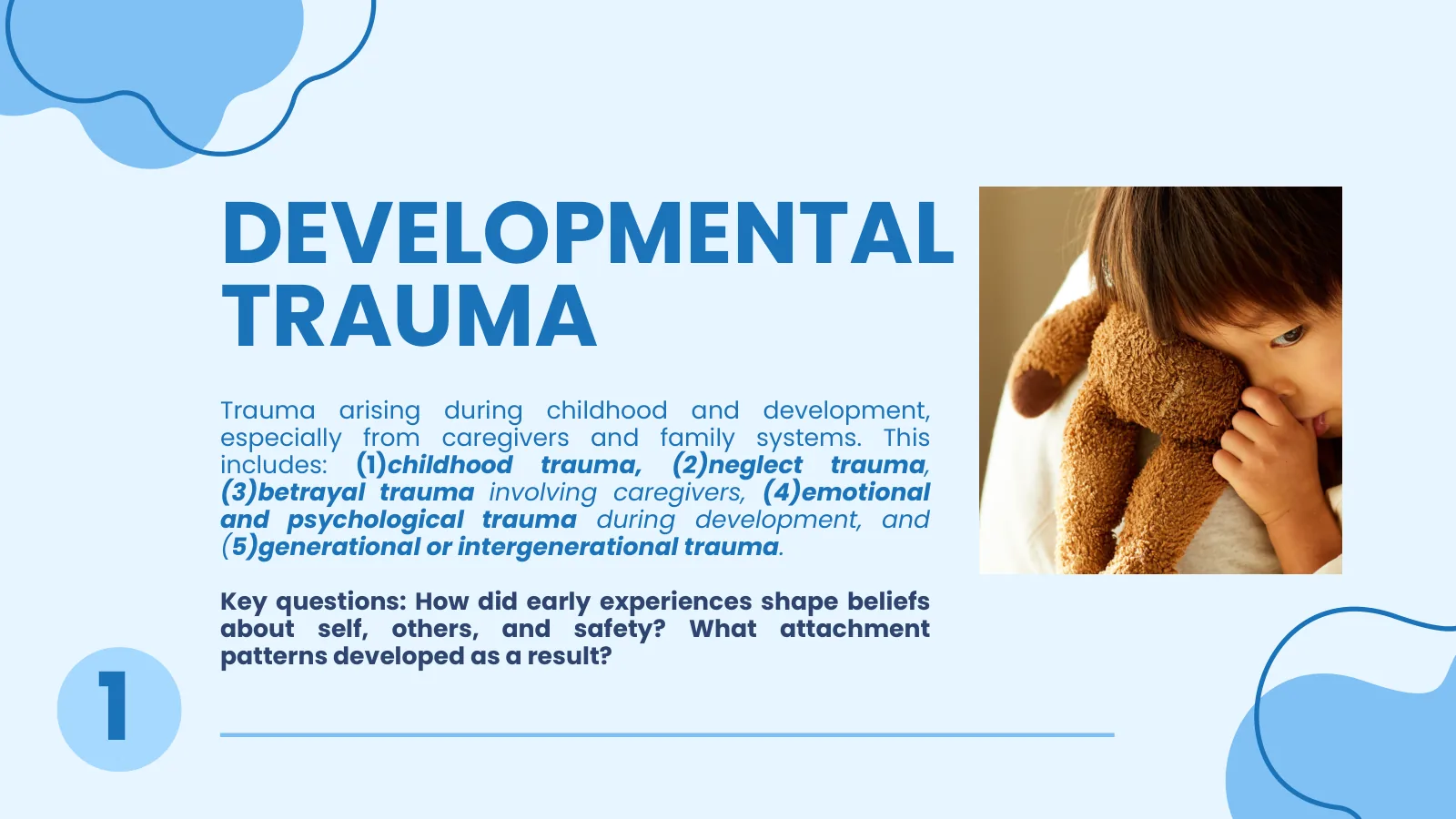
Developmental trauma is trauma arising during childhood and development, especially from caregivers and family systems. It gathers up five things the last session treated separately: childhood trauma, neglect, betrayal involving caregivers, emotional and psychological trauma during development, and generational trauma. Two questions run through all of it — how did early experiences shape beliefs about self, others and safety, and what attachment patterns developed as a result?
Childhood and neglect trauma
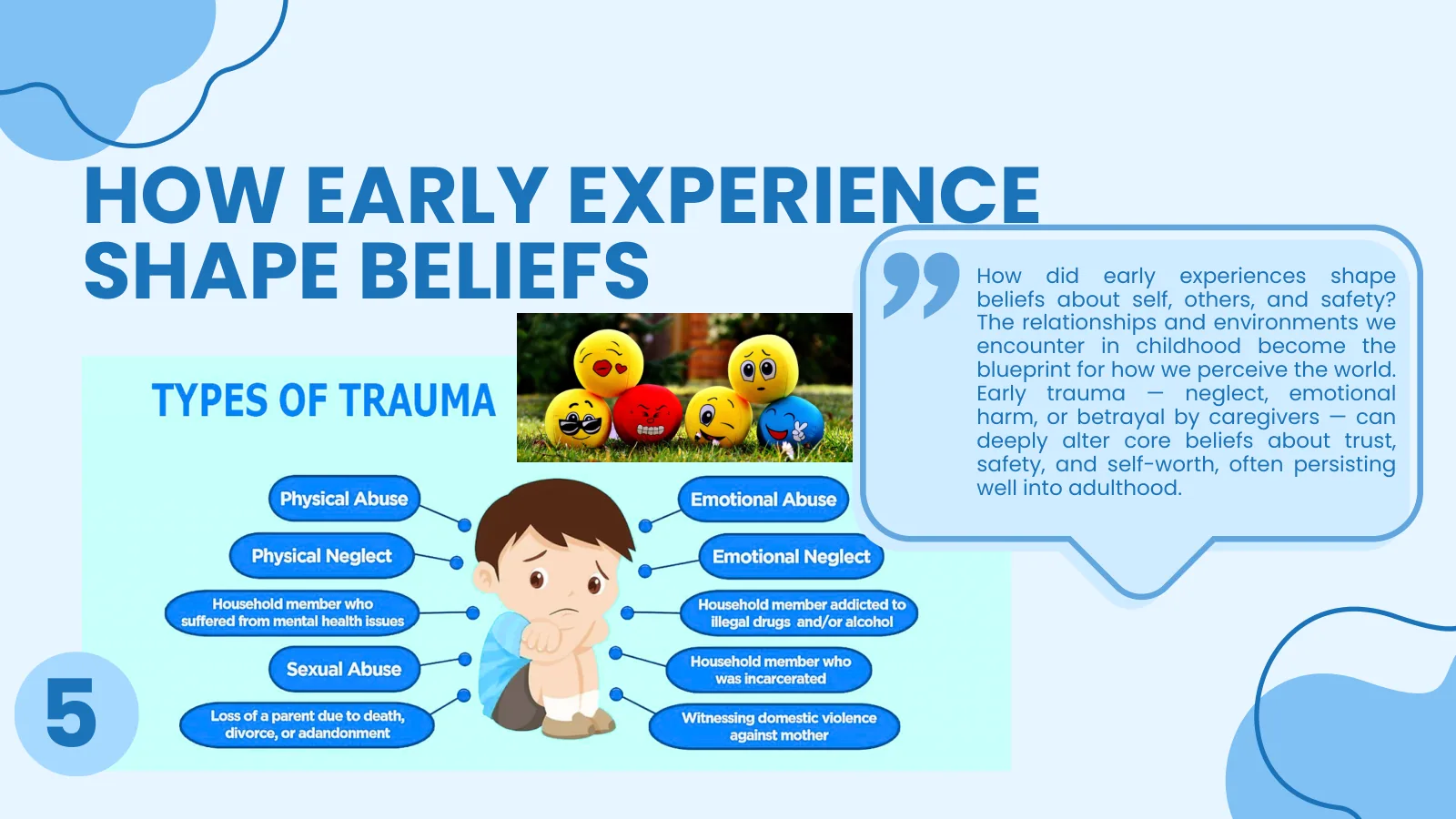
Childhood trauma occurs during formative years, often involving abuse, violence or instability in the home. It can deeply shape a child’s developing brain, sense of safety and ability to regulate emotions. Neglect works differently but cuts just as deep: it is harm caused by the absence of essential care, nurturing and emotional attunement, depriving a child of the foundation needed for healthy development and disrupting attachment, self-worth and the capacity to trust.
Betrayal trauma
Betrayal trauma occurs when a trusted caregiver causes harm, violating the child’s sense of safety and trust. Because the source of harm is also the source of care, it deeply disrupts attachment bonds — leaving confusion, shame, and difficulty trusting others in later relationships.
Generational trauma
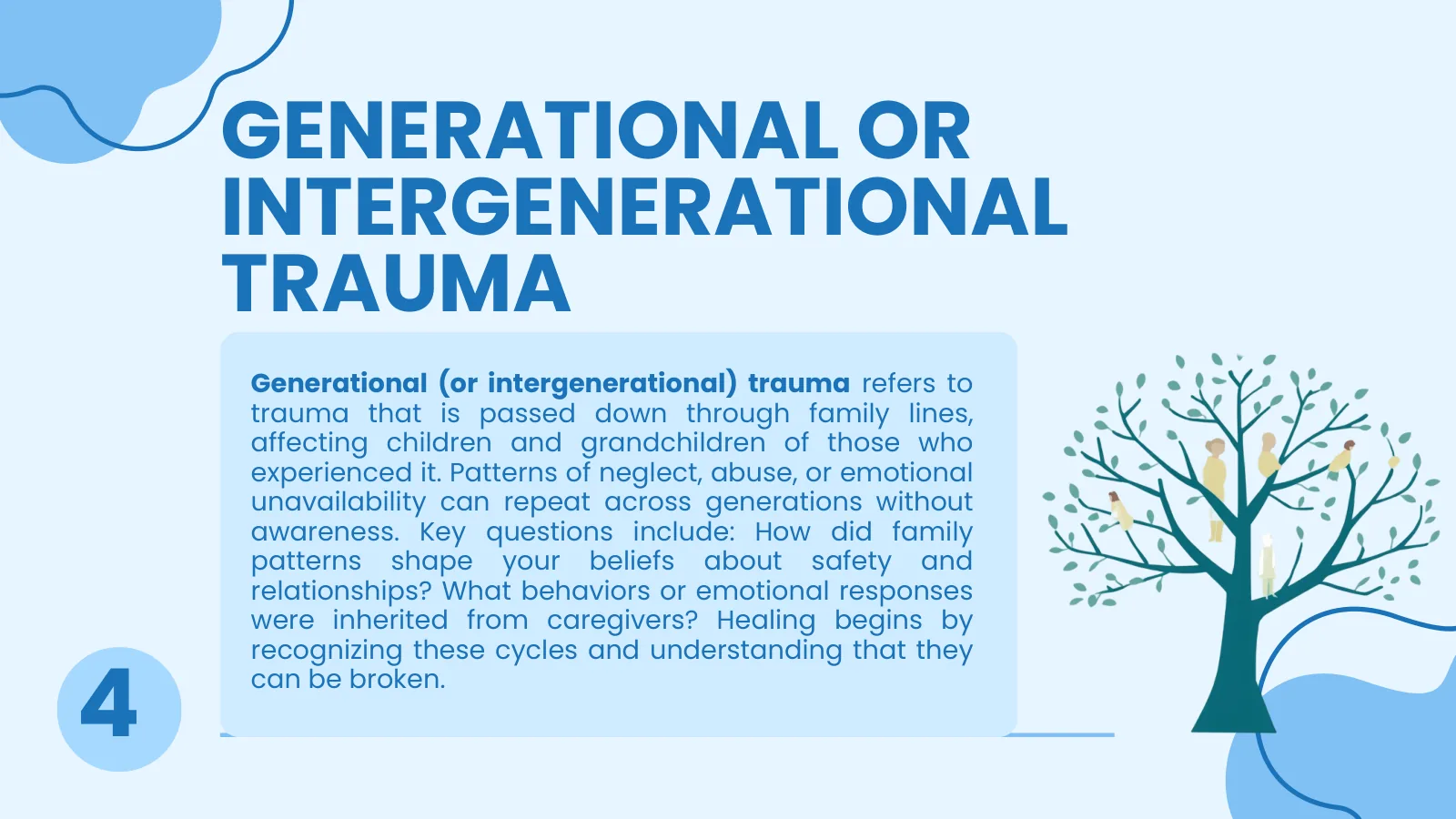
Generational trauma passes down through family lines, affecting children and grandchildren of those who first experienced it. Patterns of neglect, abuse or emotional unavailability repeat across generations, often without anyone noticing. Healing begins by recognising these cycles — and understanding that they can be broken.
How early experience shapes belief
The relationships and environments we meet in childhood become the blueprint for how we read the world. Early trauma — neglect, emotional harm, or betrayal by a caregiver — can deeply alter core beliefs about trust, safety and self-worth, and those beliefs often persist well into adulthood without ever being examined.
Attachment patterns
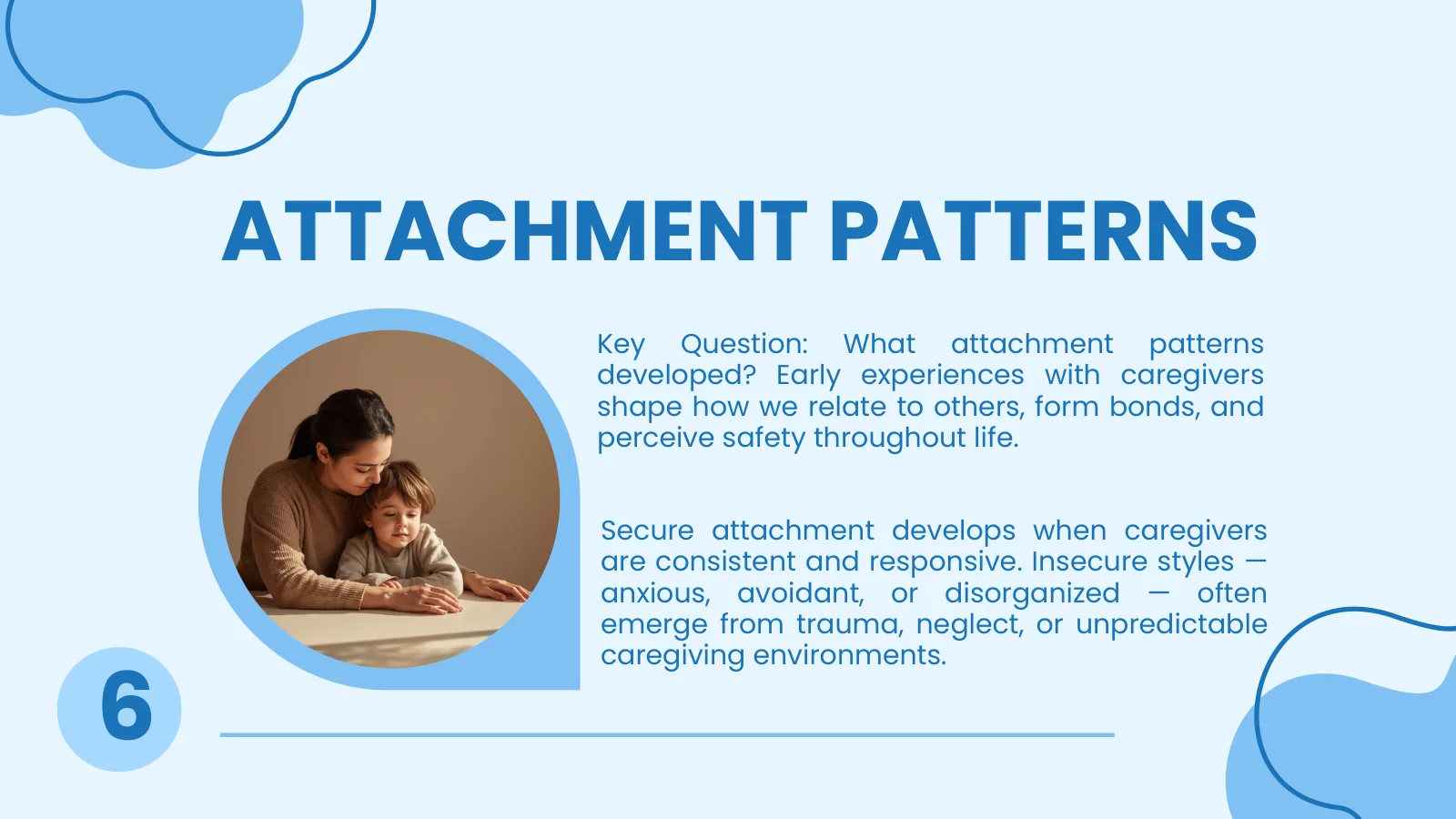
Early experiences with caregivers shape how we relate to others, form bonds, and perceive safety throughout life. Secure attachment develops where caregivers are consistent and responsive. Insecure styles — anxious, avoidant, or disorganised — often emerge from trauma, neglect, or unpredictable caregiving.
Surrendering our wounds to God
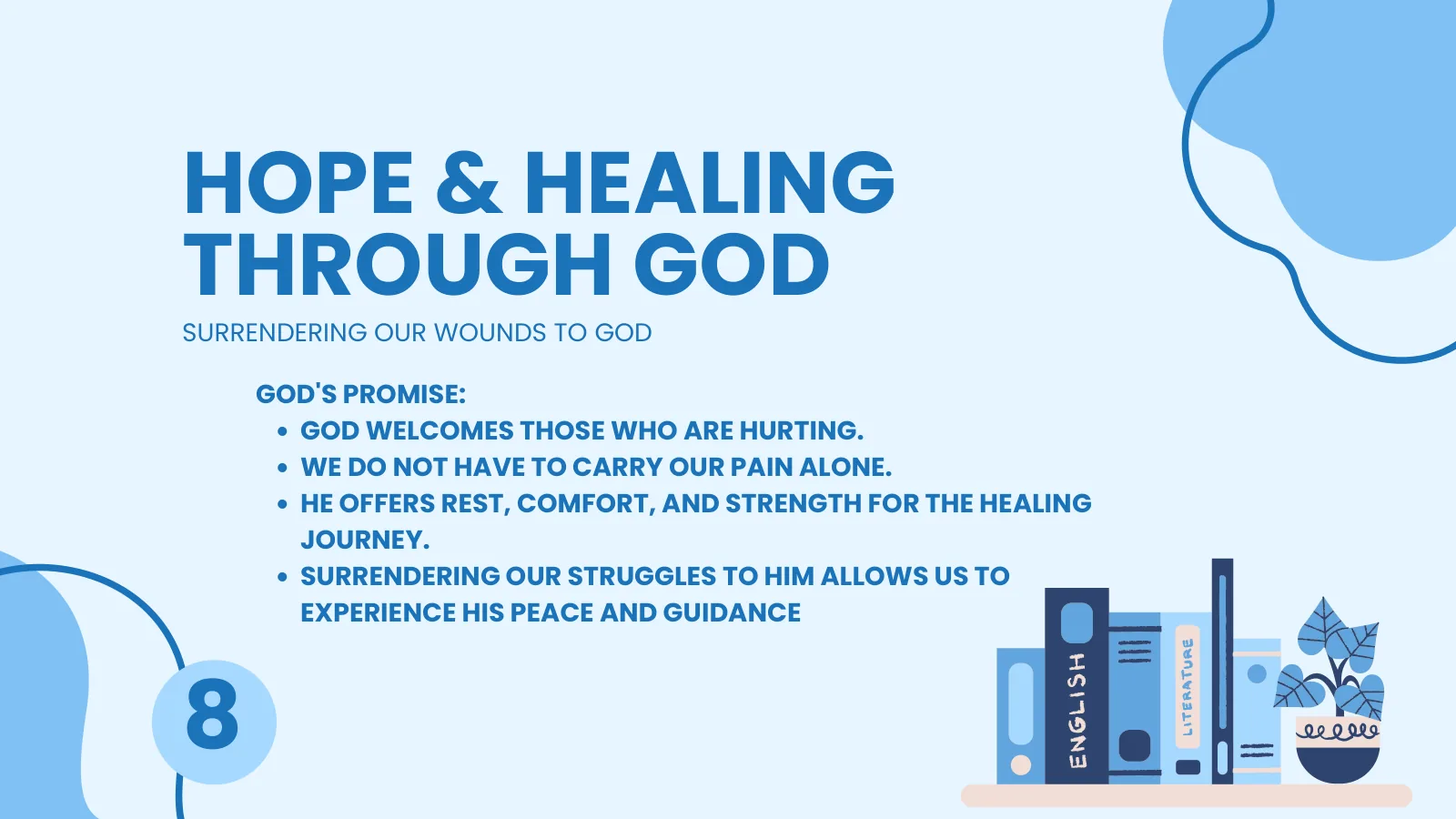
God welcomes those who are hurting. We do not have to carry our pain alone. He offers rest, comfort and strength for the healing journey, and surrendering our struggles to Him is what opens the way to His peace and guidance.
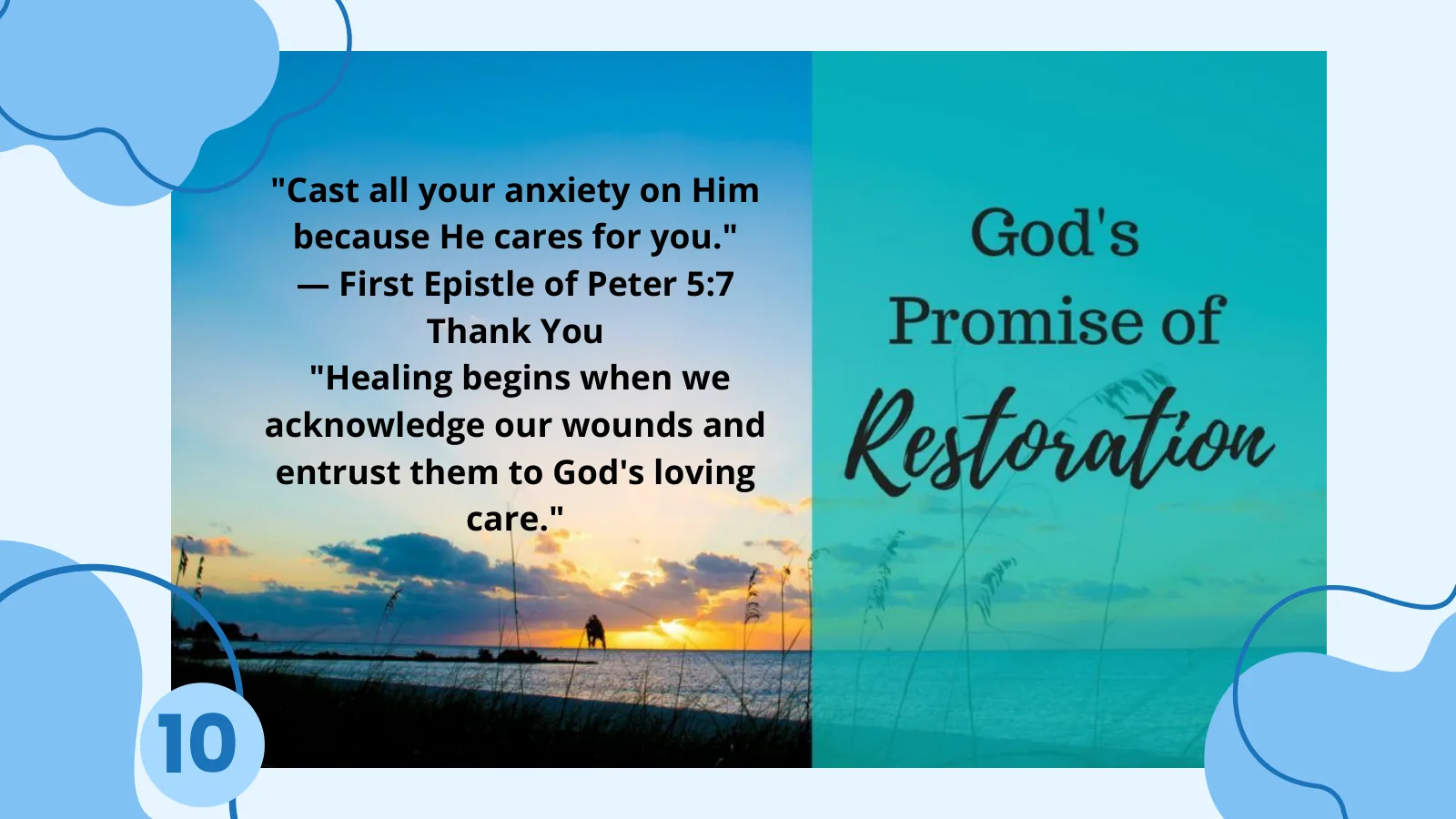
Cast all your anxiety on Him because He cares for you.
1 Peter 5:7God’s promise of restoration
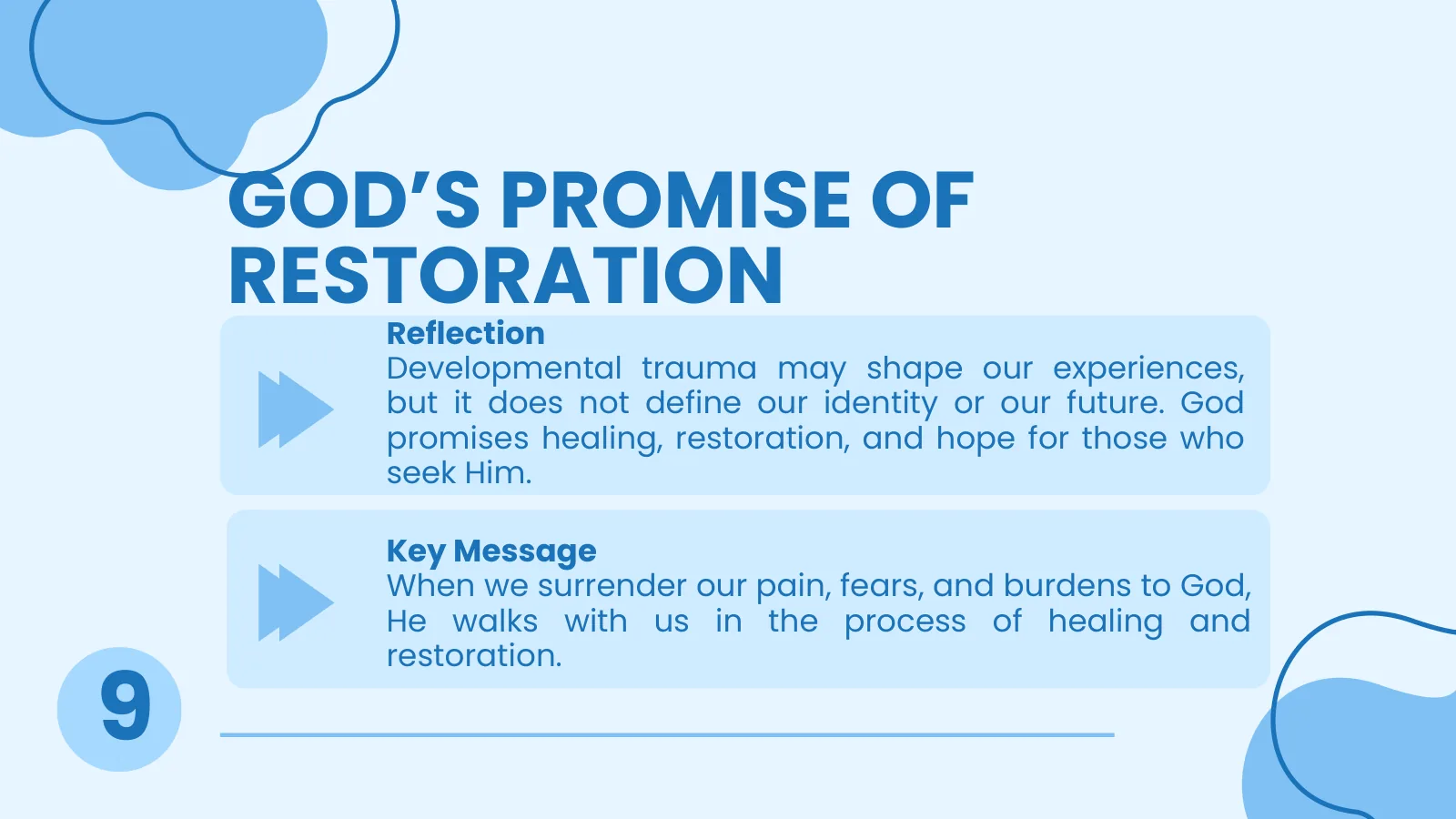
Developmental trauma may shape our experiences, but it does not define our identity or our future. When we surrender our pain, our fears and our burdens to God, He walks with us through the process of healing and restoration. Healing begins when we acknowledge our wounds and entrust them to His care.
Reflection
- Complete the sentence honestly: “Growing up, I learned that…” Does that belief still hold true today?
- Which family pattern do you recognise in yourself that you did not choose?
- What would it mean to hand that pattern to God rather than manage it alone?
Father, You know the shape my early years left in me. Where I learned fear instead of safety, and silence instead of trust, meet me there. Break what should not continue, and let it stop with me. Amen.
PrayerSlides
Browse the teaching slides
Swipe, or use the arrows. 11 slides.
A note before you download
These materials are offered for spiritual formation and group study. They are not counseling and are not a substitute for professional care. If you are carrying something heavy, we would be glad to walk with you — reach out to us — and we encourage seeking qualified professional help alongside prayer and community.
Session 2 handoutPDF · A5 · for printing and offline readingDownload ↓