
Session 3 of 6
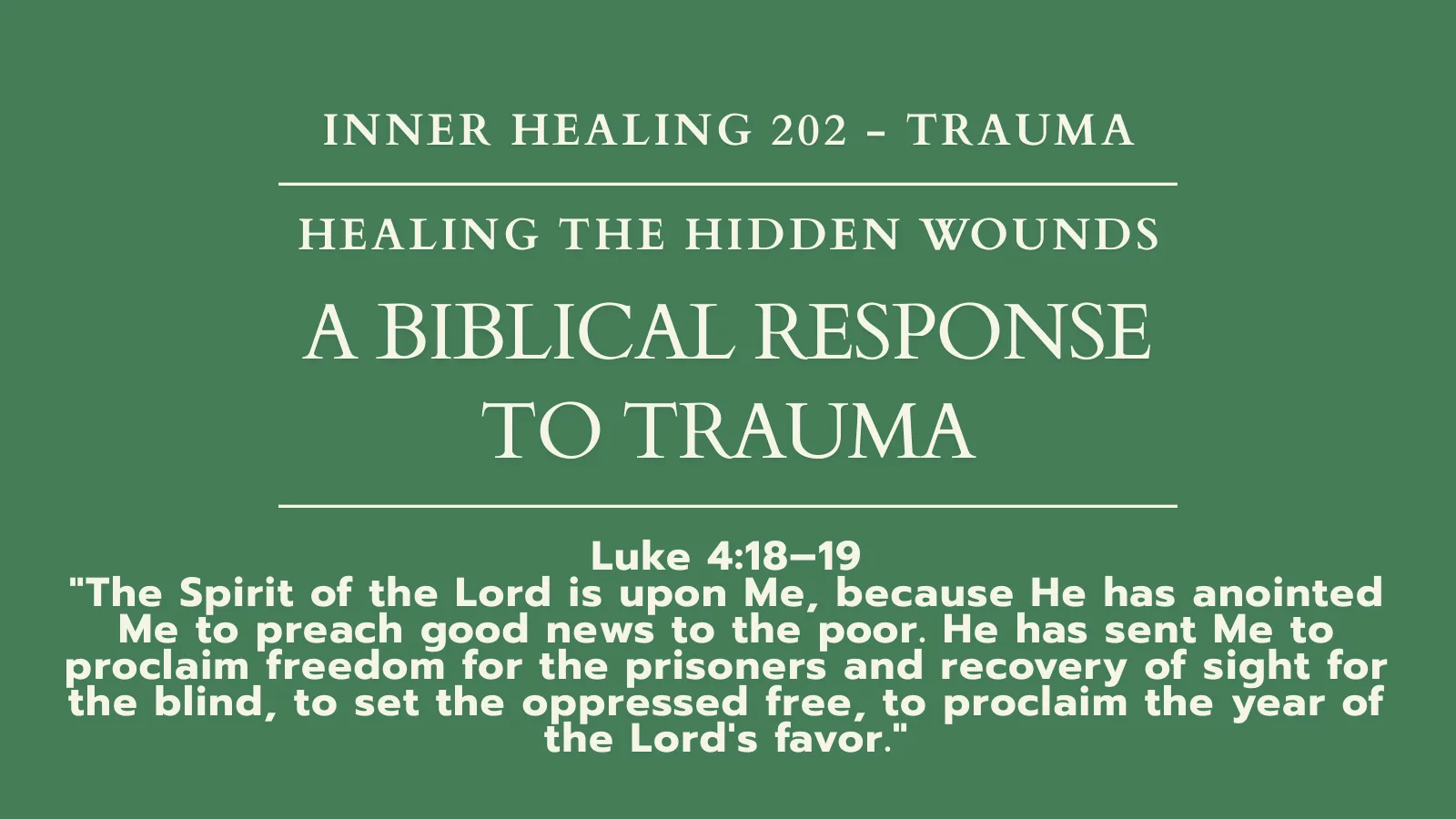
Healing the Hidden Wounds: A Biblical Response to Trauma
A biblical response to trauma, and the church’s part in it
Focus
Trauma in today’s world, physical and loss trauma, fear-based and social trauma, how God heals, and the church’s response.
The Spirit of the Lord is upon Me, because He has anointed Me to preach good news to the poor. He has sent Me to proclaim freedom for the prisoners and recovery of sight for the blind, to set the oppressed free, to proclaim the year of the Lord’s favour.
Luke 4:18–19Trauma in today’s world
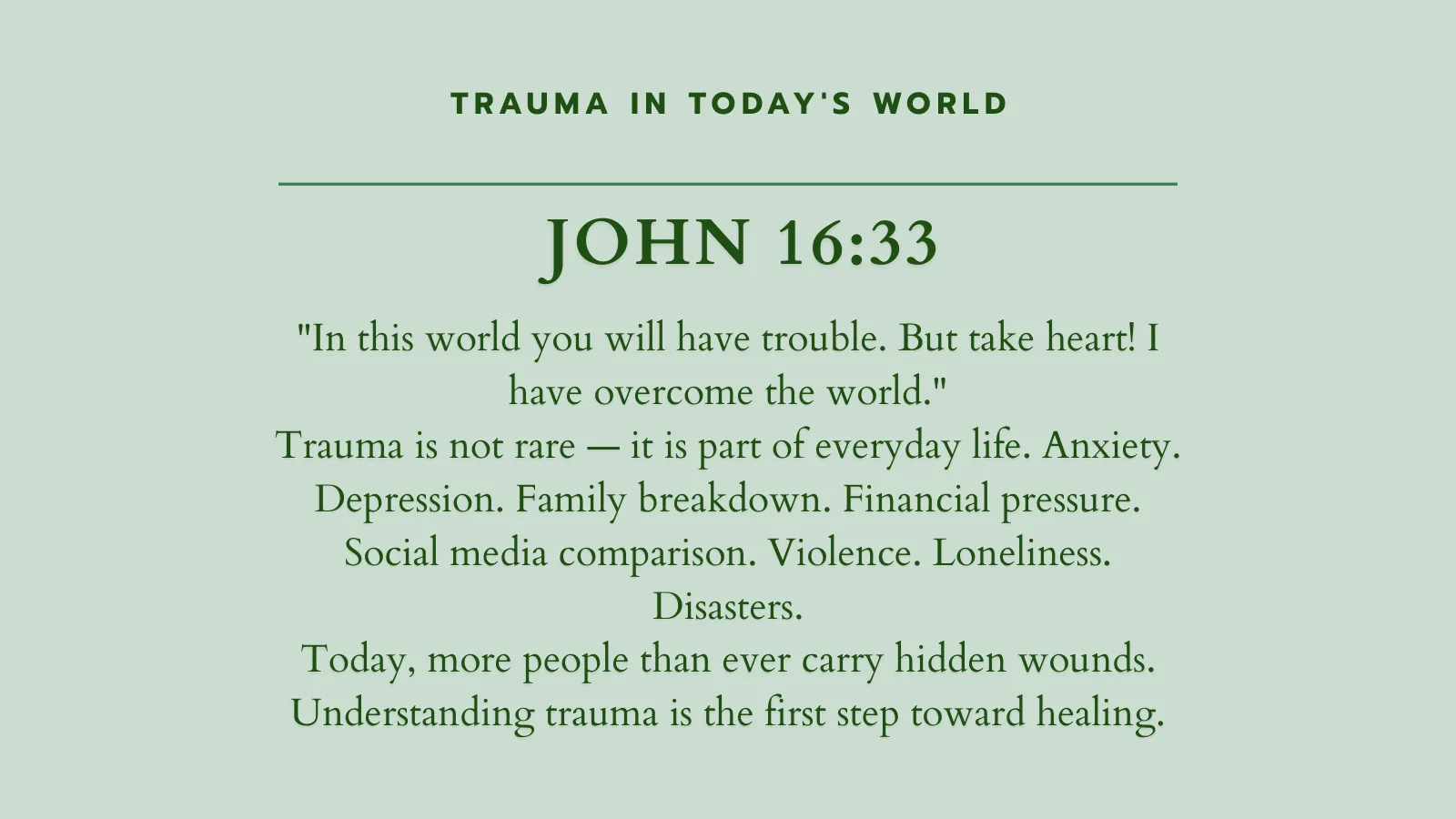
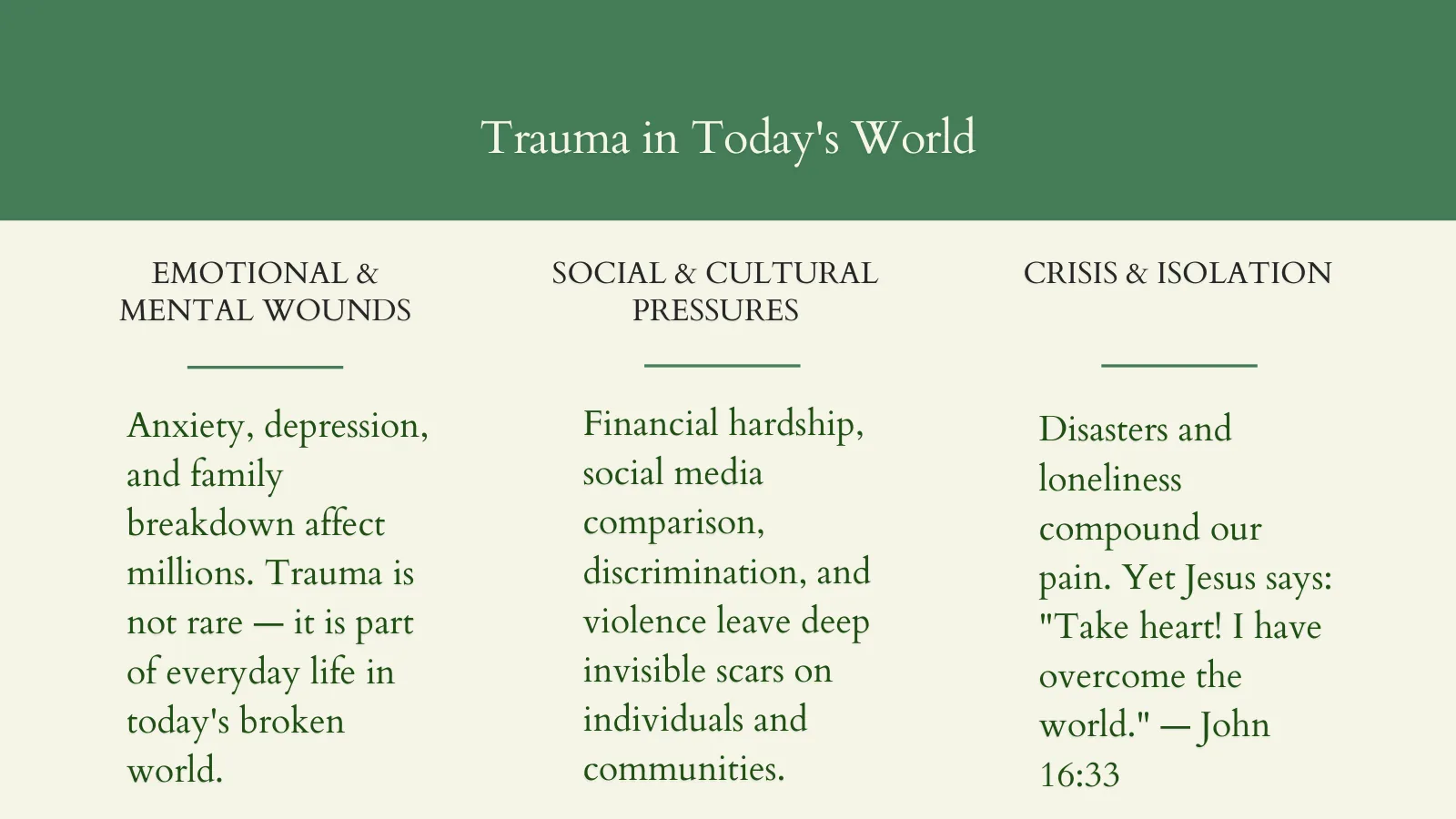
Trauma is not rare. Anxiety, depression, family breakdown, financial pressure, social media comparison, violence, loneliness, disasters — more people than ever carry hidden wounds. Understanding trauma is the first step toward healing, and Jesus does not pretend otherwise: “In this world you will have trouble. But take heart! I have overcome the world.”
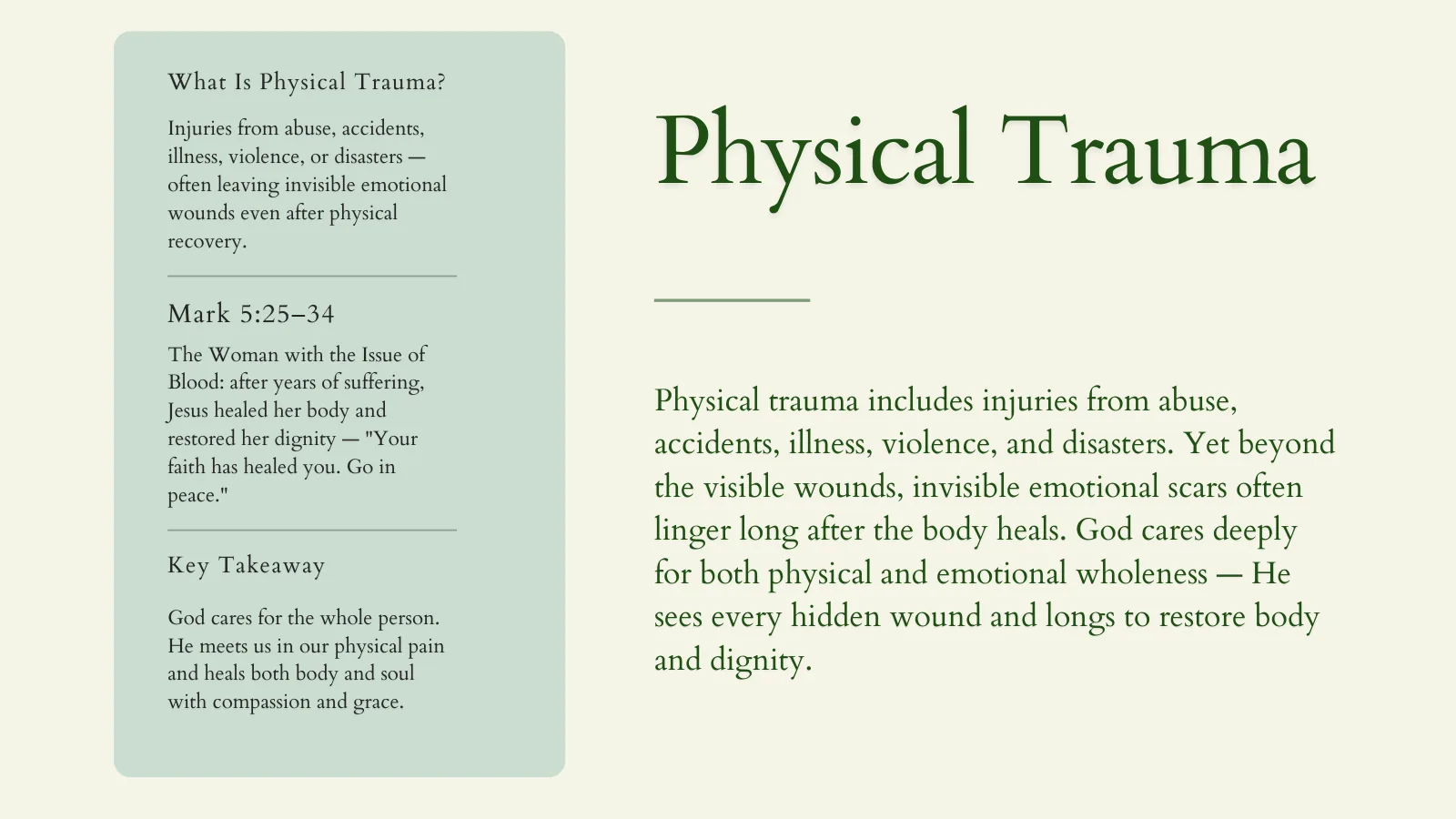
Physical trauma
Physical trauma includes injuries from abuse, accidents, illness, violence and disasters. Beyond the visible wounds, invisible emotional scars often linger long after the body heals. The woman with the issue of blood had suffered for years; Jesus healed her body and restored her dignity in the same moment — “Your faith has healed you. Go in peace.” God cares for the whole person.
Loss trauma
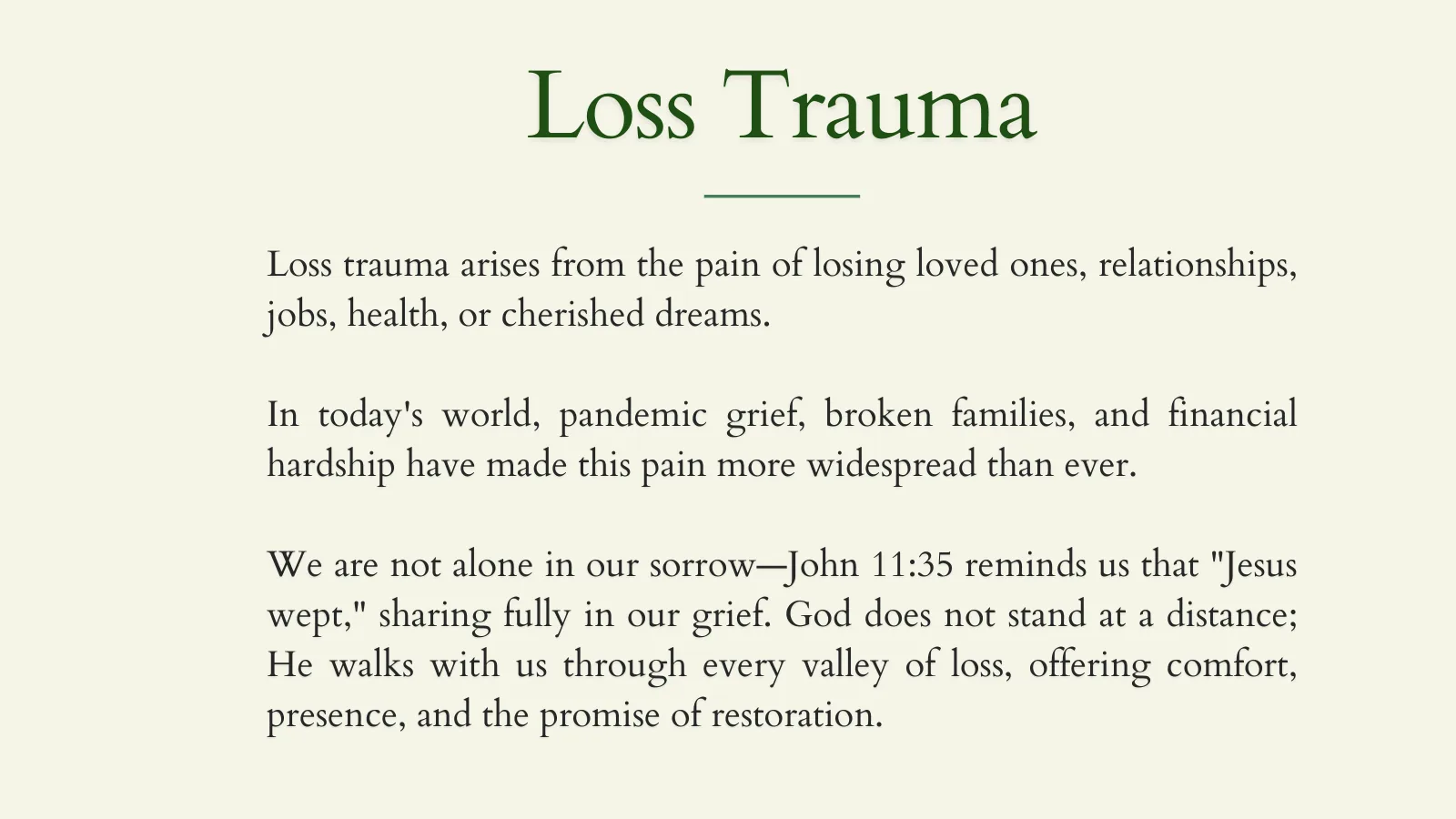
Loss trauma arises from the pain of losing loved ones, relationships, jobs, health, or cherished dreams. Pandemic grief, broken families and financial hardship have made it more widespread than ever. We are not alone in our sorrow: John 11:35 records that Jesus wept, sharing fully in grief. God does not stand at a distance — He walks with us through every valley of loss.
Fear-based trauma
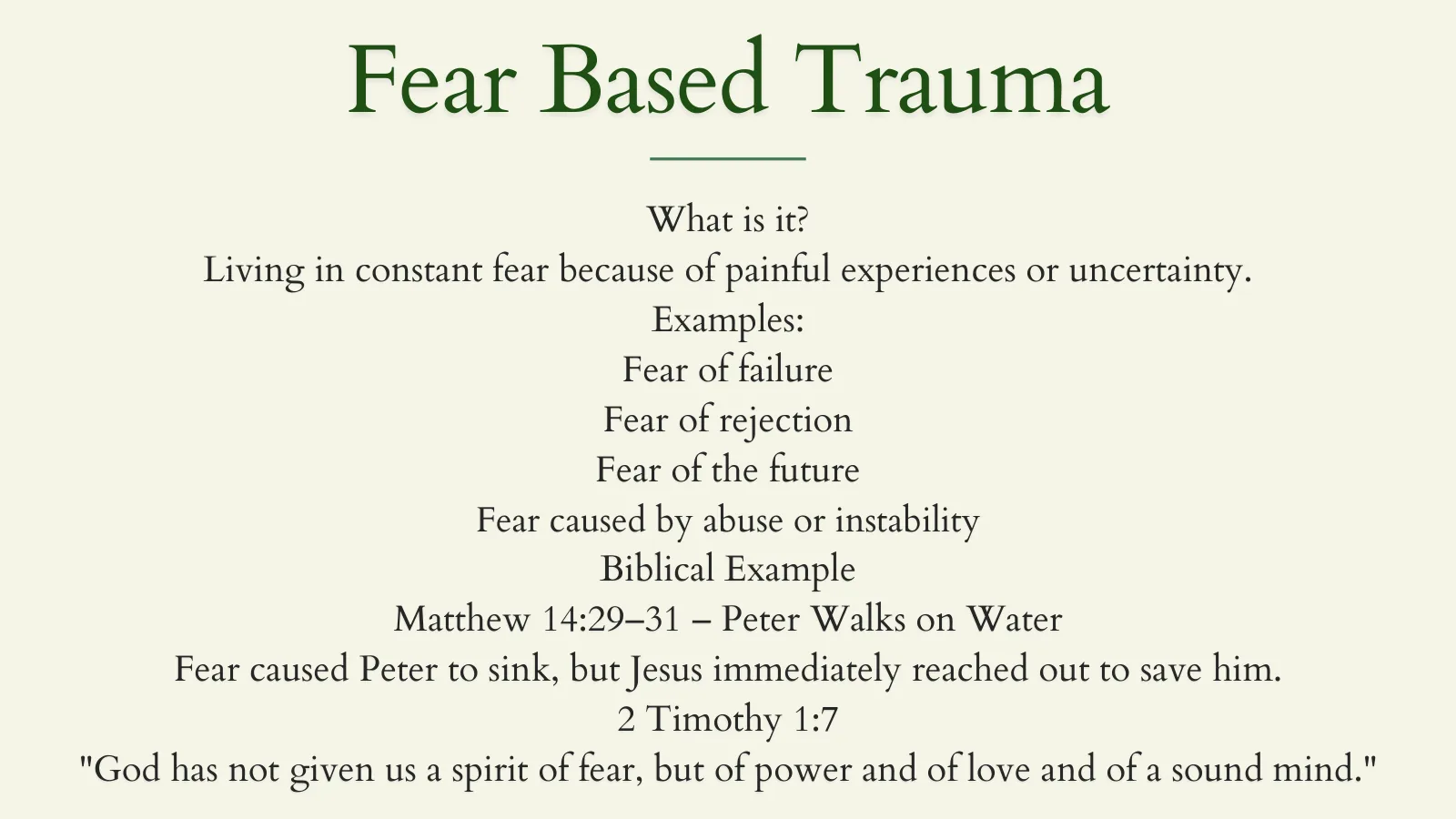
This is living in constant fear because of painful experience or uncertainty — fear of failure, of rejection, of the future, or fear caused by abuse and instability. When Peter walked on the water, it was fear that made him sink, and Jesus immediately reached out and caught him. The reaching out is the point.
God has not given us a spirit of fear, but of power and of love and of a sound mind.
2 Timothy 1:7Social and cultural trauma
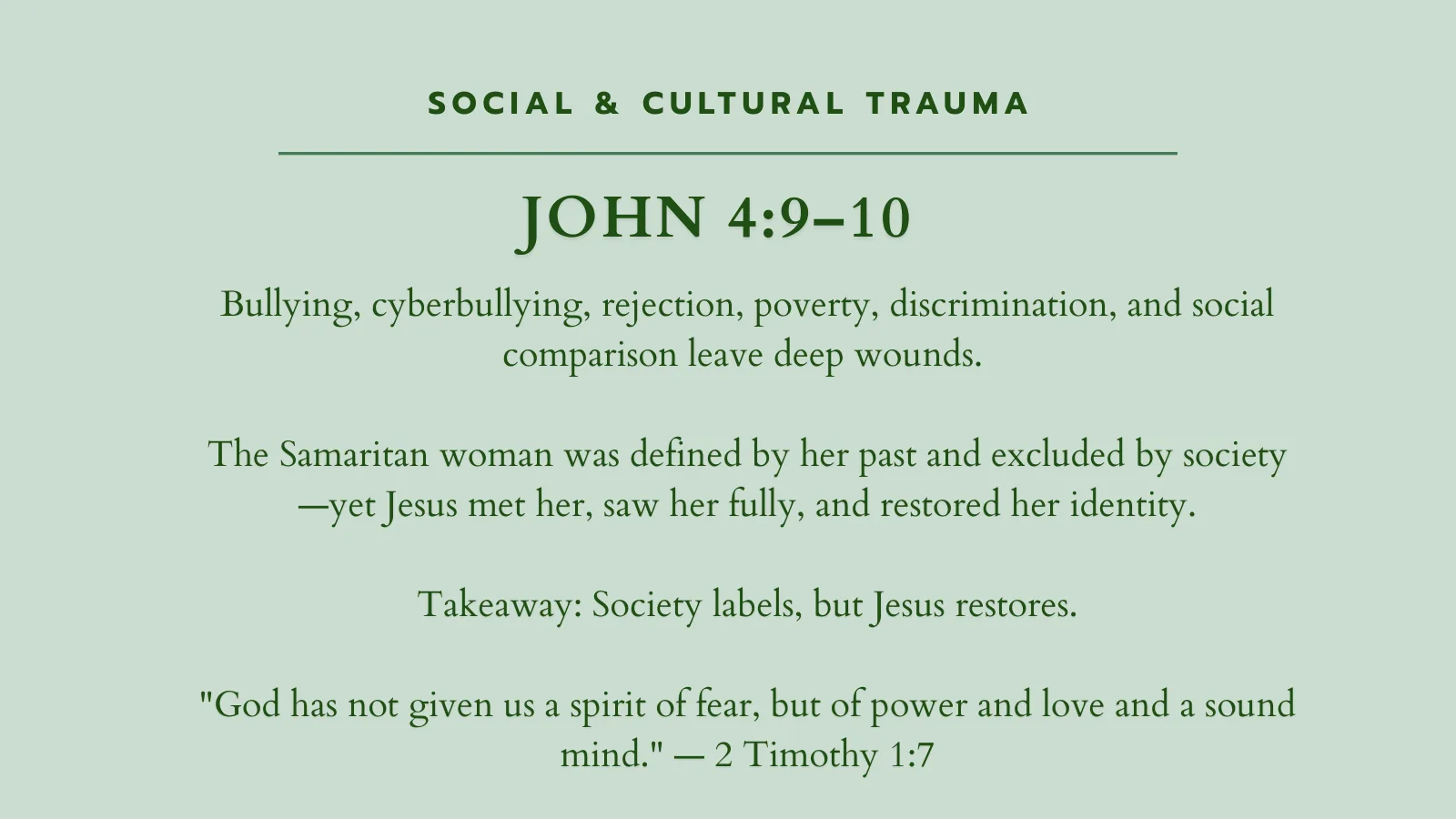
Bullying, cyberbullying, rejection, poverty, discrimination and social comparison leave deep wounds. The Samaritan woman was defined by her past and excluded by her society — yet Jesus met her, saw her fully, and restored her identity. Society labels; Jesus restores.
How does God heal?
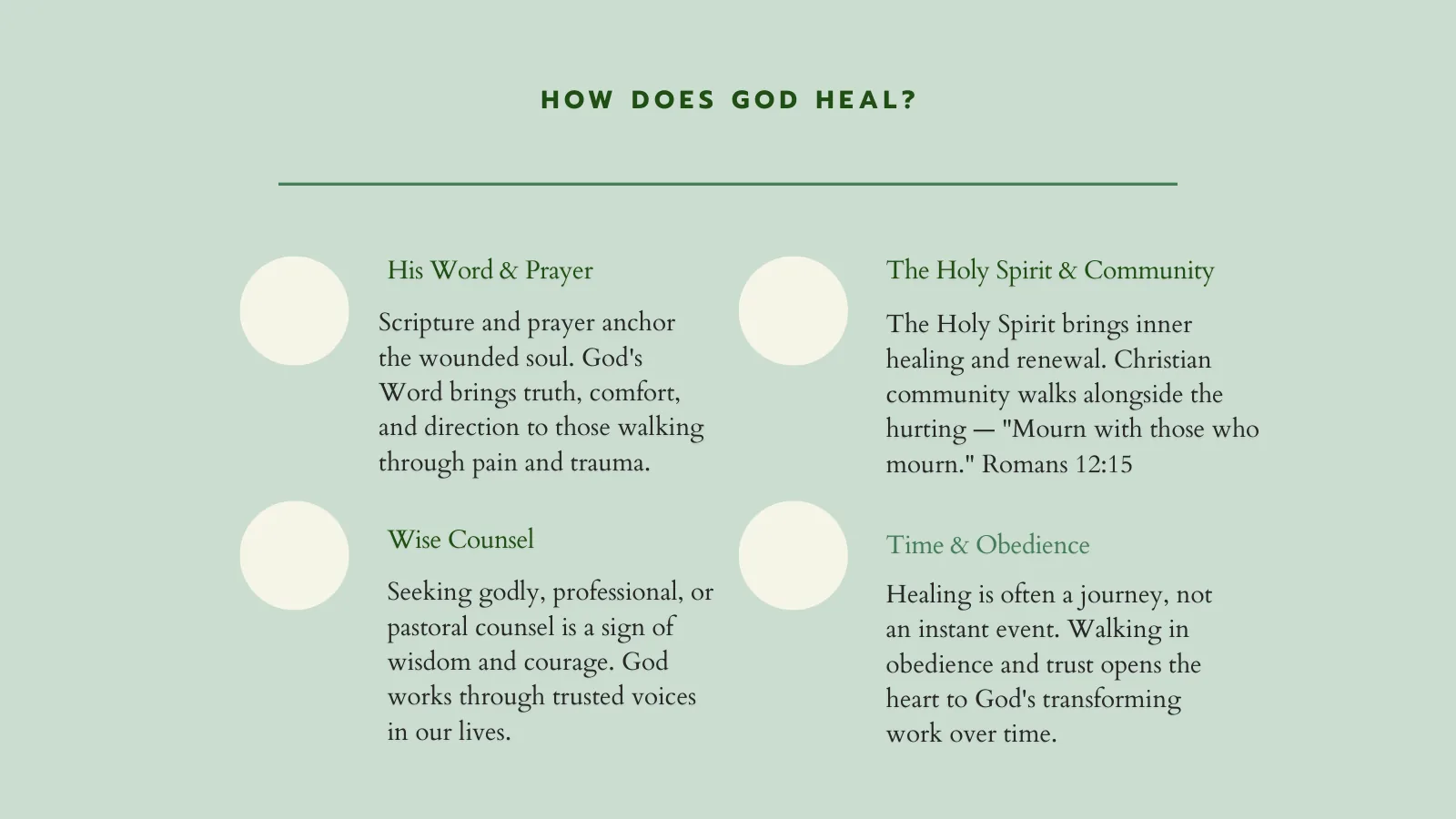
Through His Word and prayer, which anchor the wounded soul and bring truth, comfort and direction. Through the Holy Spirit and community, where the church walks alongside the hurting — “mourn with those who mourn.” Through wise counsel, because seeking godly, professional or pastoral help is a mark of wisdom and courage, not of weak faith. And through time and obedience, because healing is usually a journey rather than an instant event.
The church’s response
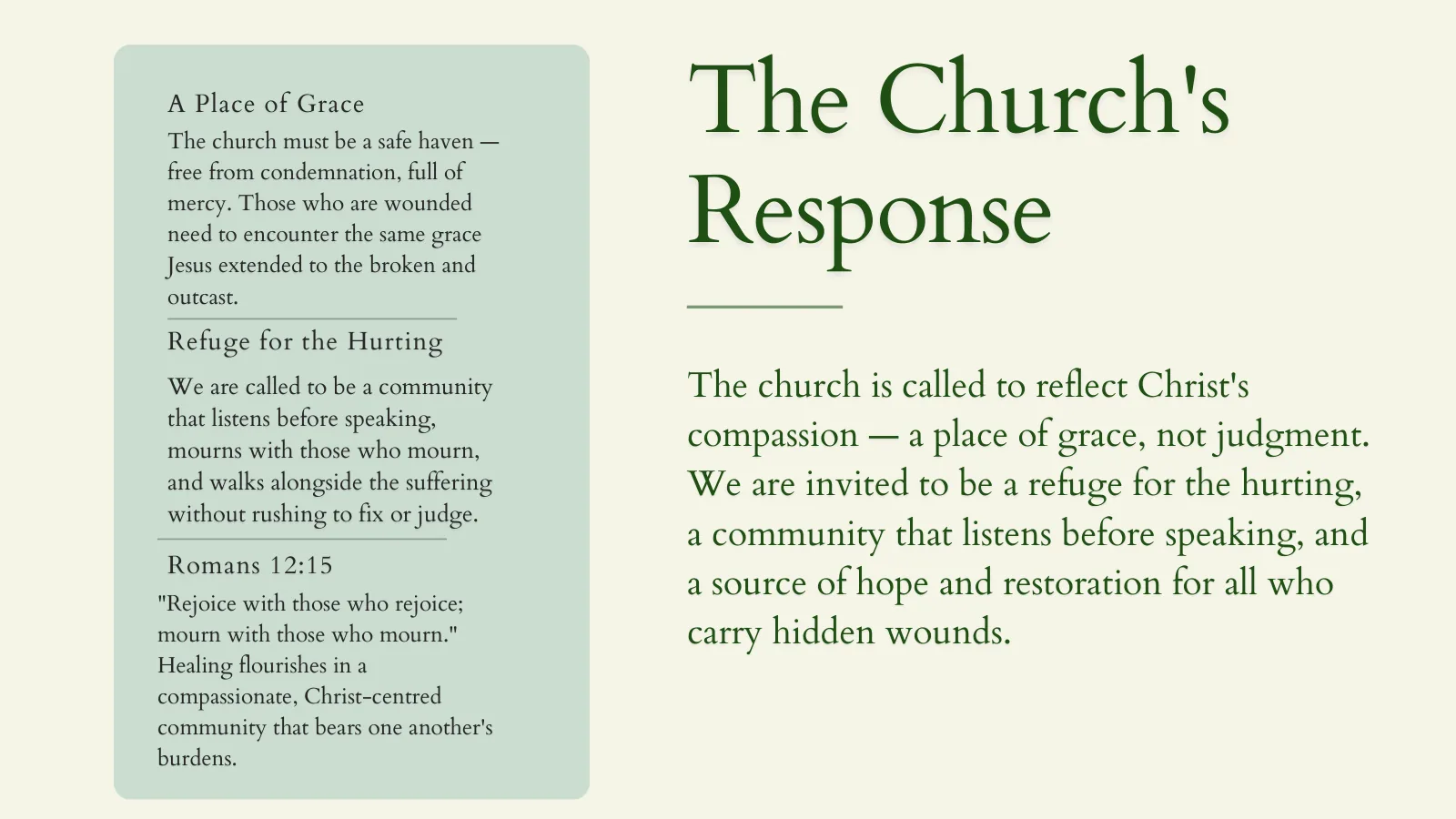
The church is called to reflect Christ’s compassion — a place of grace, not judgment. It must be a safe haven, free from condemnation and full of mercy, where the wounded meet the same grace Jesus extended to the broken and the outcast. That means being a community that listens before speaking, mourns with those who mourn, and walks alongside the suffering without rushing to fix or to judge.
Hope in Christ
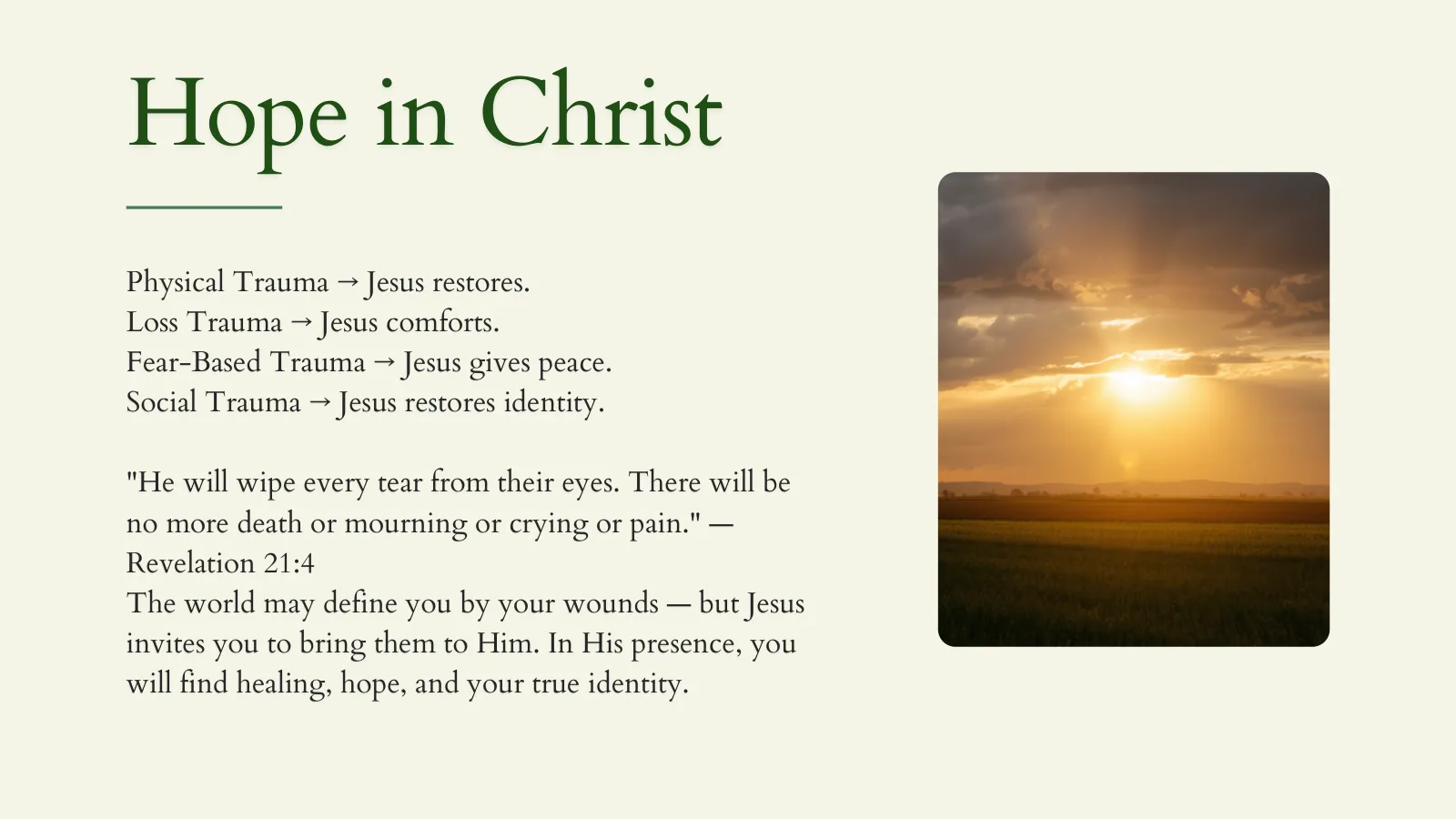
Physical trauma — Jesus restores. Loss trauma — Jesus comforts. Fear-based trauma — Jesus gives peace. Social trauma — Jesus restores identity. The world may define you by your wounds, but Jesus invites you to bring them to Him, and in His presence you find healing, hope, and your true identity.
He will wipe every tear from their eyes. There will be no more death or mourning or crying or pain.
Revelation 21:4Reflection
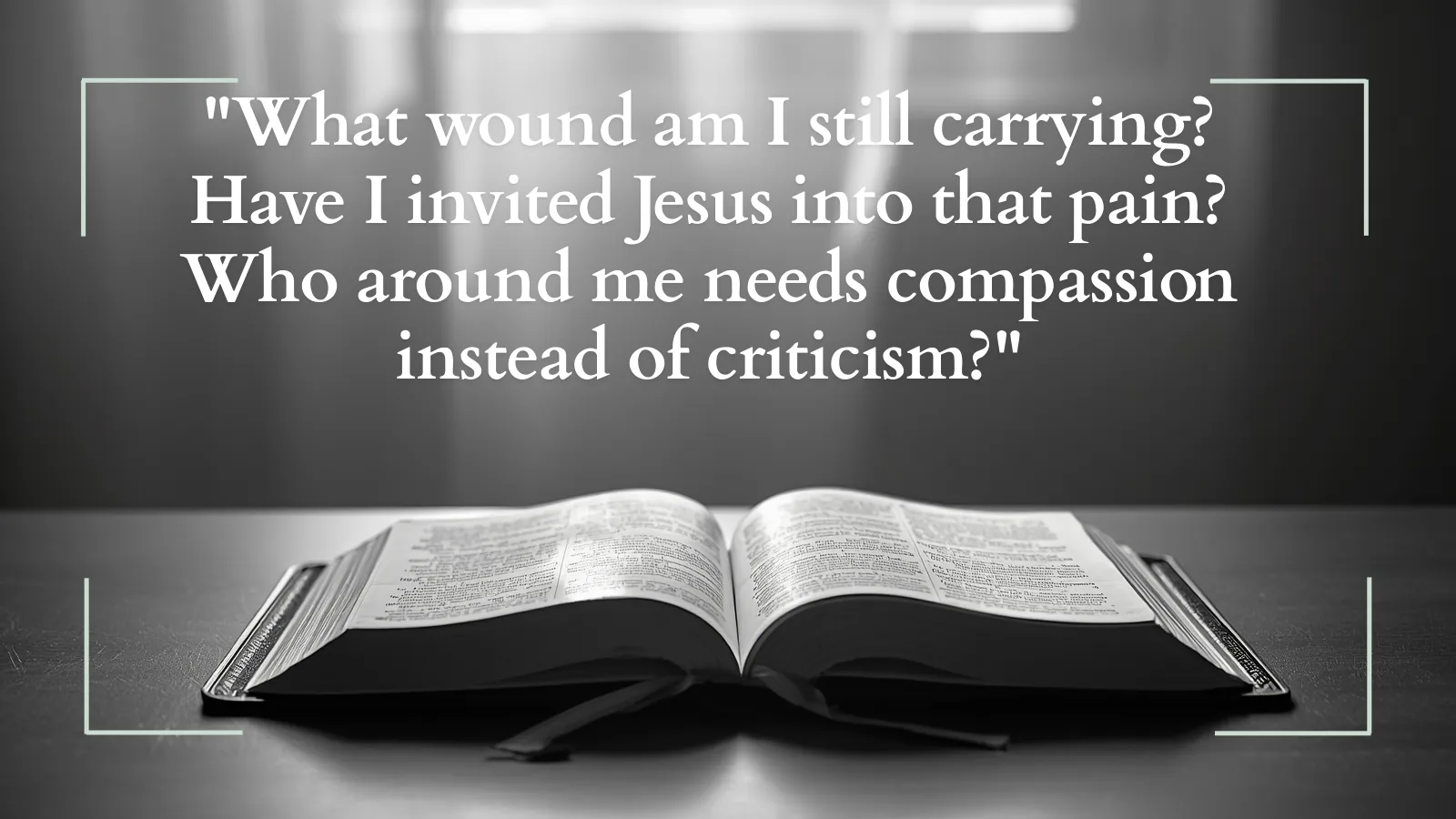
- What wound am I still carrying?
- Have I invited Jesus into that pain, or only around it?
- Who around me needs compassion instead of criticism?
Challenge
Pick one person this week whom you would normally correct, and listen to them instead — all the way to the end, without preparing your reply while they speak.
Slides
Browse the teaching slides
Swipe, or use the arrows. 12 slides.
A note before you download
These materials are offered for spiritual formation and group study. They are not counseling and are not a substitute for professional care. If you are carrying something heavy, we would be glad to walk with you — reach out to us — and we encourage seeking qualified professional help alongside prayer and community.
Session 3 handoutPDF · A5 · for printing and offline readingDownload ↓